Bleeding Joints in Hemophilia: Why the Knee Is Most Commonly Affected
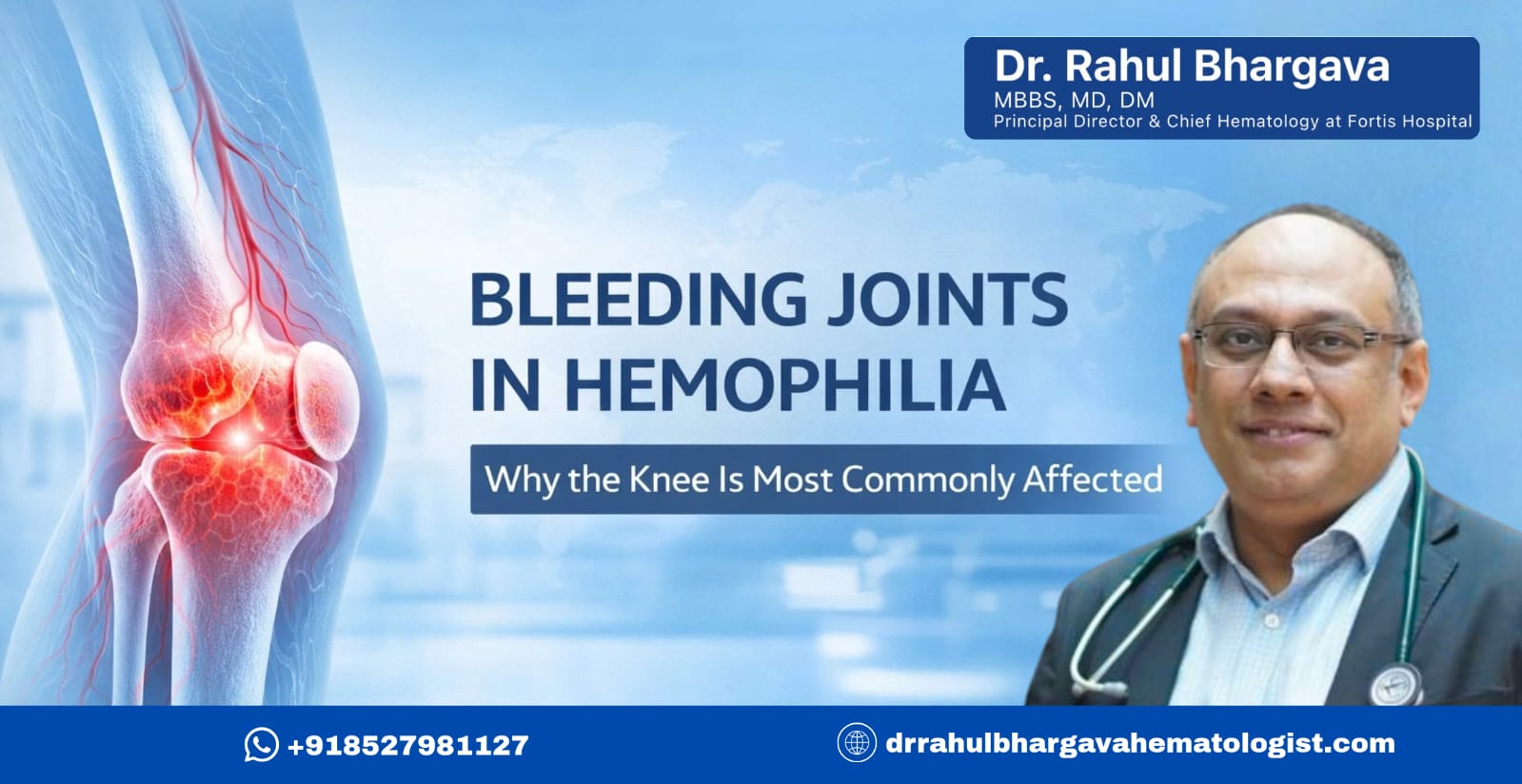
Table of Contents
Introduction: Understanding Hemophilia and Joint Bleeding
Hemophilia is a lifelong genetic bleeding disorder that affects the blood’s ability to clot normally. This means even minor injuries or everyday activities can lead to prolonged bleeding — not just under the skin, but inside muscles and joints as well. Hemophilia is most commonly inherited and occurs due to a deficiency in specific clotting proteins (Factors VIII or IX), causing the blood to lack the necessary “stop-bleeding” mechanism.
Among all the complications associated with hemophilia, joint bleeding (called hemarthrosis) is one of the most frequent and debilitating. Of all joints in the body, the knee is most commonly affected, followed by the ankles and elbows.
In this blog, we will explore:
What joint bleeding is and why it happens in hemophilia
Why the knee is especially vulnerable
How repeated joint bleeds cause long-term damage
Symptoms, diagnosis, and treatment approaches
Prevention and quality of life strategies
Whether you are a patient, caregiver, health enthusiast, or someone seeking deeper medical insight, this article will help you understand this challenging but manageable aspect of hemophilia.
What Is Hemophilia? A Simple Overview
The Basics
Hemophilia is not just “bleeding more easily”; it is a clotting disorder caused by a deficiency of clotting factors, which are proteins your body needs to form a stable blood clot. Without adequate levels of these proteins, any bleeding — visible or hidden — doesn’t stop as it should.
There are several types:
- Hemophilia A – Factor VIII deficiency (most common)
- Hemophilia B – Factor IX deficiency
- Hemophilia C – Factor XI deficiency (rare)
These clotting factor deficiencies are usually inherited and often identified early in life — even in infancy or early childhood.
What Is a Joint Bleed (Hemarthrosis)?
Hemarthrosis refers to bleeding into the joint space — the area inside the joint capsule where bone meets bone and where the synovial fluid normally lubricates movement.
Why It Happens in Hemophilia
In people with hemophilia, even without injury, spontaneous bleeding can occur within joints because there is insufficient clotting factor to stop microbleeds. These bleeds can:
Distend the joint capsule
Increase pressure inside the joint
Lead to pain, swelling, stiffness, and warmth
Cause long-term joint damage if not treated promptly
Repeated or untreated hemarthrosis episodes can eventually cause hemophilic arthropathy — a chronic, degenerative joint condition.
Why Are Joints Like the Knee Most Affected?
Although hemarthrosis can occur in any joint, hinge joints are more commonly affected — especially the knees, ankles, and elbows.
Key Reasons Why the Knee Is Most Commonly Affected
1. Weight-Bearing and Large Surface Area
The knee joint bears the weight of the entire body and undergoes significant stress throughout the day. Because of the high mechanical demands placed on it during walking, running, sitting, standing and changing direction, even small amounts of bleeding can create noticeable symptoms.
2. Repetitive Use and Micro-Trauma
The knee is one of the most active joints in everyday life. Even normal movement — especially in children, athletes, or active adults — can place repetitive stress on the joint lining (synovium). Over time, these stresses can make it a common site for spontaneous or recurrent bleeding in people with clotting deficiencies.
3. Hinge Joint Structure
Unlike ball-and-socket joints (like the hip or shoulder), hinge joints such as the knees have less structural complexity and protective muscle support, making them more prone to bleeding and effusion (fluid build-up after bleeding).
4. Target Joint Formation
In hemophilia, a “target joint” refers to a joint that has experienced repeated bleeding episodes over time. Once a joint becomes a target joint — often starting with the knee — it becomes prone to further bleeds and progressive damage if not managed well.
What Happens During a Knee Joint Bleed?
When blood enters the joint cavity:
- Pressure Rises – As blood accumulates, the tight joint capsule becomes distended and painful.
- Inflammation Begins – The joint lining becomes inflamed, leading to warmth and swelling.
- Range of Motion Reduces – Pain and stiffness limit movement, which can lead to muscle weakness over time.
- Repeated Bleeds Worsen Damage – Chronic bleeding alters cartilage, bone, and joint structure, leading to permanent arthropathy.
Without treatment, repeated knee bleeding can mimic features of degenerative arthritis and significantly reduce quality of life.
Symptoms of Knee Bleeds in Hemophilia
Common signs include:
Sudden knee pain or tenderness
Visible swelling or warmth around the joint
Difficulty bending or straightening the knee
Stiffness after inactivity
Reduced mobility or limp
Recurring episodes in the same joint
Prompt recognition and treatment are essential to protect the joint and prevent chronic damage.
How Is Joint Bleeding Diagnosed?
Diagnosis often involves:
1. Clinical Evaluation
Your doctor will ask about symptoms, patterns of bleeding, recent injuries, and activity patterns.
2. Physical Examination
Examining swelling, range of motion, joint warmth, and tenderness.
3. Imaging
Ultrasound or MRI can help detect fluid inside the joint and early cartilage changes.
4. Laboratory Tests
Blood tests to measure clotting factor levels and confirm the severity of hemophilia are essential.
Accurate diagnosis helps guide early and appropriate treatment to prevent long-term complications.
Treatment Strategies for Knee Joint Bleeds
Effective treatment aims to rapidly stop bleeding, relieve symptoms, and protect joint health.
1. Clotting Factor Replacement Therapy
The cornerstone of hemophilia management is replacing the missing clotting factor (Factor VIII or IX). This helps stop active bleeding and prevent future bleeds.
2. R.I.C.E. Therapy
In early joint bleeding episodes, standard measures include:
- Rest – Allow the joint to recover
- Ice – Reduce swelling
- Compression – Support the knee and limit bleeding
- Elevation – Reduce fluid build-up
3. Pain Management
Analgesics and anti-inflammatory medications may be advised under doctor supervision.
4. Physiotherapy
Once the acute bleeding stops, guided physiotherapy helps:
Restore range of motion
Rebuild muscle strength around the knee
Prevent stiffness
5. Long-Term Joint Health Interventions
In individuals with recurrent bleeds, prophylactic (regular) clotting factor therapy can significantly reduce episodes and long-term joint damage.
Long-Term Complications: Hemophilic Arthropathy
If knee bleeds recur, they can lead to hemophilic arthropathy — a chronic joint disorder characterized by:
Progressive cartilage damage
Synovial inflammation
Bone deformities
Reduced mobility
Chronic pain
Over time, these changes can mirror osteoarthritis and lead to significant disability if not proactively managed.
Prevention: Protecting the Knees and Other Joints
1. Prophylactic Replacement Therapy
Regular clotting factor infusions can dramatically reduce the frequency of bleeds and protect joints before damage begins.
2. Safe Exercise
Low-impact activities like swimming or cycling build strength without putting undue stress on joints.
3. Avoid High-Risk Activities
Contact sports or activities with high fall risks may need to be avoided unless protective measures and medical guidance are in place.
4. Weight Management
Maintaining a healthy weight reduces mechanical stress on the knee.
5. Immediate Treatment
Early recognition and treatment of even minor joint bleeding stop the cycle of recurrent trauma.
Lifestyle and Daily Living with Hemophilia Knee Bleeds
Living with hemophilia requires a holistic approach:
Be aware of early warning signs
Maintain regular follow-ups with a hematologist
Build a tailored exercise and physiotherapy plan
Use appropriate joint protection gear
Educate family and caregivers about knee bleed management
With proper treatment and lifestyle adaptations, many people with hemophilia enjoy full, active lives.
When to Seek Urgent Help
Immediate medical care is essential if a joint bleed is accompanied by:
Severe swelling or pain
Fever
Inability to move the knee
Signs of infection
Bleeding that doesn’t respond to treatment
Prompt intervention can protect joint integrity and overall health.
Conclusion
Joint bleeding — especially in the knee — is one of the most common and impactful complications of hemophilia. Because the knee bears the brunt of everyday movement and is structurally prone to bleeding, it becomes the most frequently affected site among patients.
Early detection, prompt treatment, and long-term preventive strategies are crucial to preserving joint function and quality of life. With advances in clotting factor therapies, supportive care, and lifestyle management, individuals with hemophilia can lead active and fulfilling lives while minimizing the impact of joint bleeds.
Frequently Asked Questions
Hemarthrosis refers to bleeding inside a joint, usually triggered by a lack of clotting factors. In hemophilia, even small trauma or spontaneous bleeding can cause blood to collect within the joint space, leading to pain, swelling, stiffness, and long-term damage if not treated promptly.
People with hemophilia lack Factor VIII or IX, which are essential for normal blood clotting. Without these factors, small blood vessels inside joints can leak blood during everyday activities. Since joints are constantly in motion and under pressure, they are more prone to spontaneous bleeding compared to other parts of the body.
The knee is the most commonly affected joint because it is:
-
Weight-bearing (supports body weight)
-
Mechanically stressed during daily movement
-
Structurally a hinge joint, making it prone to micro-trauma
-
Often a “target joint” in people with repeated bleeds
This combination of mechanical stress and lower protective muscle support makes knees more vulnerable to bleeding.
Early symptoms may include:
-
Sudden stiffness or tightness
-
Warmth around the knee
-
Swelling that develops over hours
-
Pain or tenderness
-
Difficulty bending or straightening the leg
-
Limping or favoring the leg
Recognizing these signs early helps prevent long-term joint damage.
Yes. Joint bleeds often cause significant pain, especially once swelling increases and the joint capsule becomes stretched by accumulated blood. Pain may worsen with movement and improve slightly with rest.