Fortis Gurugram Enters the Global Elite: Only Indian Hospital in World’s Best Smart Hospitals 2026
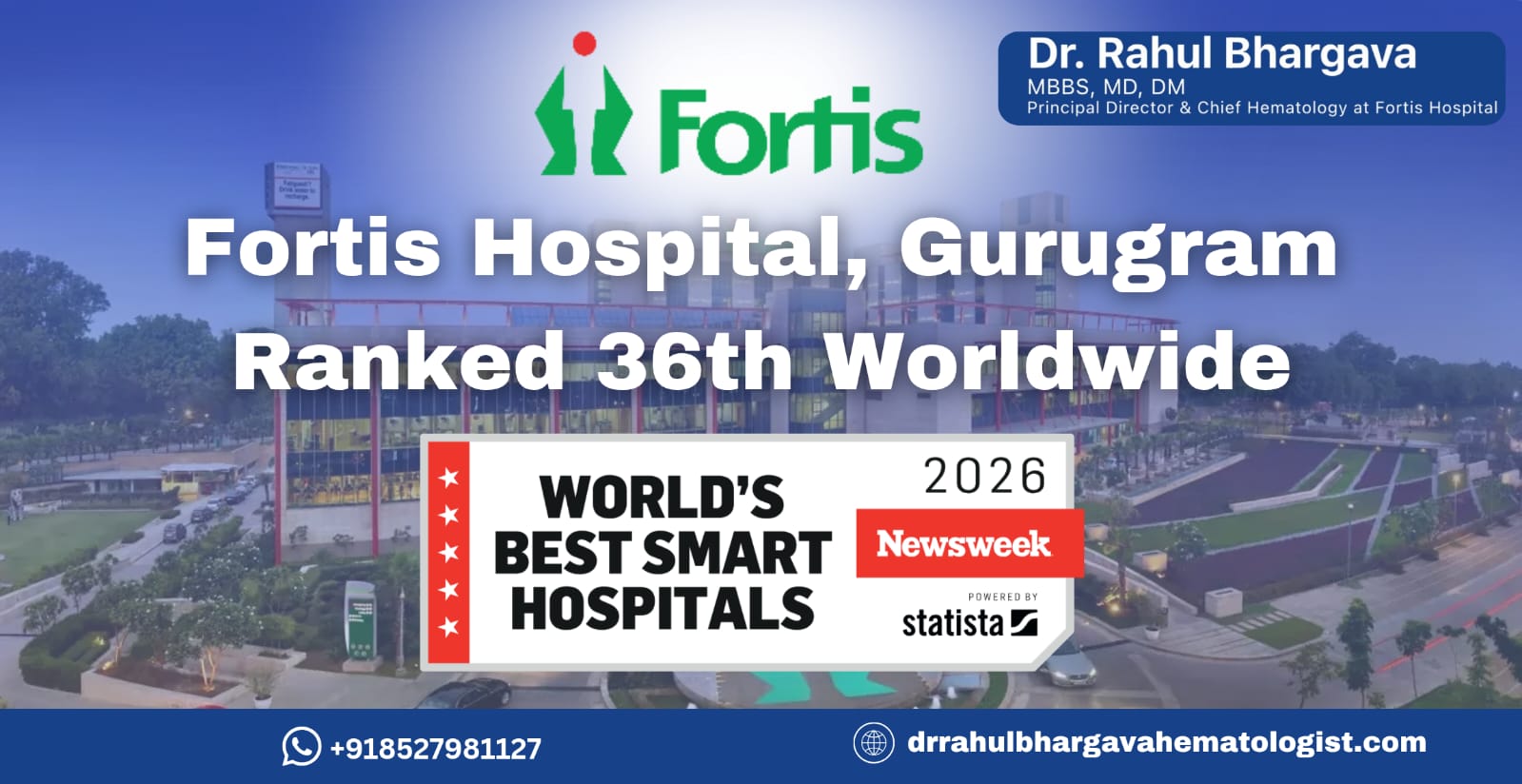
Table of Contents
Healthcare in India is undergoing a dramatic transformation. For decades, India has been recognized for medical expertise, cost-effective treatment, complex surgical capabilities, and specialty care across fields such as oncology, hematology, cardiology, neurology, nephrology, and transplant medicine. However, the global lens has now expanded beyond clinical excellence. Today, the world measures healthcare through an additional dimension: digital maturity, smart infrastructure, data intelligence, remote connectivity, cybersecurity, robotics, and patient-centered digital workflows. In this new era, Indian healthcare has achieved a milestone that marks its entry into the future.
In the prestigious World’s Best Smart Hospitals 2026 rankings released by Newsweek in collaboration with Statista, Fortis Memorial Research Institute (FMRI), Gurugram secured the 36th position globally — and became the only Indian hospital ranked in the Top 50. This recognition places Fortis Gurugram among the world’s most technologically advanced healthcare institutions alongside leading centers in the United States, Germany, South Korea, Japan, and Singapore. For India, this achievement signals the beginning of a new chapter: one where the country is not merely a hub for skilled doctors and affordable treatments, but a globally competitive player in technology-driven, digitally sophisticated healthcare delivery.
To understand the magnitude of this advancement, it is essential to break down what constitutes a “smart hospital,” why these rankings matter globally, how Fortis Gurugram fits into this landscape, and what this means for Indian patients, international medical travelers, future healthcare innovation, and specific specialties such as oncology and hematology.
What Is a Smart Hospital and Why Does It Matter Today?
A smart hospital is not defined by the presence of modern machines alone. Instead, it represents a fully integrated digital ecosystem where clinical excellence is augmented by software, data systems, automation, AI-powered diagnostics, robotics, precision surgery, telemedicine, cybersecurity, and predictive care tools that work together to improve safety, outcomes, and patient experience.
Healthcare worldwide is shifting from reactive care to proactive, predictive, personalized, and participatory care. Modern health challenges — cancer, metabolic diseases, genetic disorders, organ failure, blood disorders, neurological illnesses, pandemics, aging populations — require systems that can detect early, respond faster, allocate resources intelligently, and maintain continuity of care beyond hospital walls. Smart hospitals solve these evolving problems through interconnected technologies.
Core characteristics of a smart hospital include:
- Digitally interconnected infrastructure — Electronic Health Records (EHRs), cloud-based data, integrated radiology systems, digital pathology, Lab Information Systems (LIS), and Hospital Information Systems (HIS) that allow seamless communication between departments.
- Advanced clinical technologies — Robotic surgery platforms, AI diagnostic tools, navigation-assisted procedures, smart ICUs, tele-ICUs, and wearable or bedside monitoring that enhance accuracy and safety.
- Automation and workflow optimization — Queueless OPDs, automated pharmacy dispensing, digital nursing documentation, integrated lab results, appointment scheduling apps, and smart discharge systems that reduce waiting times and administrative errors.
- Cybersecurity and data governance — Encrypted medical records, compliance with global standards (e.g., HIPAA/GDPR), secure access control for sensitive patient data, and infrastructure to protect against hacking, ransomware, and data leaks.
- Remote and virtual care ecosystems — Telemedicine, remote follow-ups, digital tumor boards, virtual multi-specialty collaboration, second opinions across borders, and home monitoring for chronic care patients.
- Predictive and personalized medicine — Integration of genomics, digital pathology, AI radiology, laboratory analytics, and clinical decision support systems to tailor diagnosis and treatment based on individual patient profiles instead of one-size-fits-all methods.
- Patient-facing digital tools — Portals, apps, SMS alerts, teleconsults, online billing, digital medical records access, and remote prescription management that empower patients to participate in their own care journey.
These capabilities are not luxuries — they are becoming global expectations. With new pandemics, chronic diseases, oncology complexity, blood disorder treatments, and transplant medicine rising, smart hospitals are better equipped to respond to rapid clinical changes, manage ICU crises, decode genomic data for precision medicine, and support long-term cancer and hematology follow-up from anywhere in the world.
How the World’s Best Smart Hospitals 2026 Ranking Works
Newsweek, in partnership with Statista, evaluates thousands of hospitals across multiple continents using a multi-layered methodology. The World’s Best Smart Hospitals ranking incorporates:
- Medical expert surveys and peer recommendations
- Digital technology adoption
- Smart clinical capability
- Telemedicine sophistication
- Cybersecurity standards
- AI and robotics integration
- Digital patient experience
- Research and innovation contribution
- Data interoperability and workflow integration
The survey pool includes doctors, hospital executives, digital health professionals, biomedical engineers, and healthcare IT leaders from over 30 nations, making it a globally vetted evaluation. The ranking reflects the healthcare sector’s evolution: clinical outcomes alone are no longer sufficient; a hospital’s ability to harness technology safely, efficiently, and ethically is equally important.
For perspective, the Top 50 includes prominent institutions known for cutting-edge medical science and digital integration. To see Fortis Gurugram listed among them marks India’s arrival in a domain historically dominated by North America, Europe, and East Asia.
Why Fortis Gurugram’s Recognition Is Historic for India
India has consistently excelled in medical talent and affordability. Patients from Africa, the Middle East, South Asia, Central Asia, and Eastern Europe have traveled to India for bone marrow transplants, cardiac surgeries, cancer treatment, renal transplants, neurosurgery, IVF, and orthopedic care. Indian specialists have earned global respect for performing highly complex procedures at lower cost than Western nations.
However, India has not always been perceived as a leader in hospital digital infrastructure or smart clinical environments. Fortis Gurugram’s entry into the World’s Best Smart Hospitals 2026 list disrupts this perception.
It demonstrates:
- India possesses digitally mature healthcare capabilities
- Indian hospitals can match global benchmarks in AI and robotics
- Indian patients can access advanced smart care domestically
- International patients can receive world-class digital care at affordable rates
- India is building healthcare for the future, not just the present
The achievement elevates India’s healthcare brand from “affordable and skilled” to “advanced, skilled, and globally competitive.”
Inside Fortis FMRI Gurugram: Understanding What Makes It a Smart Hospital
To understand why Fortis Gurugram was ranked 36th globally, we must examine how it operates internally. Smart hospital capability is determined by integration, not isolated technology. Fortis FMRI has built a multi-layered digital ecosystem:
1. Electronic Medical Records & Digital Integration
Fortis FMRI uses Electronic Health Records (EHR) systems that integrate lab results, radiology images, clinical notes, medication orders, discharge summaries, and telemedicine follow-ups. For long-term treatments like leukemia, lymphoma, multiple myeloma, aplastic anemia, thalassemia, or post-transplant monitoring, continuity of data is crucial. EHR ensures no lost files, no repeated tests, and no clinical blind spots.
PACS (Picture Archiving and Communication System) allows radiologists and oncologists to view MRI, CT, PET-CT, ultrasound, and X-ray images instantly, annotate them, and share findings digitally. AI overlays help detect lesions, nodules, metastasis patterns, and structural abnormalities faster.
Lab Information Systems integrate blood tests, cytogenetics, molecular reports, bone marrow studies, and biochemical analysis. This is essential in hematology and oncology where treatment cycles depend on weekly to daily lab trends.
2. Robotics and Image-Guided Surgery
Robotic platforms at Fortis FMRI are used in oncology, urology, gynecology, gastrointestinal surgery, thoracic surgery, orthopedics, and neurosurgery. Surgeons use robotic arms, 3D visualization, motion scaling, tremor reduction, and computer-assisted navigation to perform complex procedures with smaller incisions, less pain, fewer infections, and faster recovery. For cancer patients who require tumor resections before chemotherapy or radiation, faster recovery shortens the treatment timeline and improves outcomes.
Robotic and navigational systems are especially beneficial for immunocompromised patients (such as those on chemotherapy or post-BMT) because minimally invasive approaches lower infection risk and hospitalization duration.
3. Smart Intensive Care Units (ICUs)
Smart ICUs at Fortis use continuous multi-parameter monitoring of vital signs, cardiac rhythm, oxygenation, ventilator settings, urine output, and neurological status. These parameters feed into centralized dashboards, enabling intensivists to respond immediately. Predictive algorithms detect early signs of septic shock, acute respiratory failure, cytokine storm, arrhythmia, or hemodynamic instability.
Tele-ICU systems allow remote specialists to monitor patients in real-time, which is crucial during nighttime or when multiple critical events occur simultaneously. For hematology and oncology patients with neutropenia, sepsis, or post-transplant complications, this level of vigilance can save lives.
4. Digital Oncology and Hematology Diagnostic Ecosystem
Fortis FMRI integrates digital pathology, next-generation sequencing, AI radiology, and molecular diagnostics for cancer and blood disorder management. Digital pathology enables whole-slide scanning of biopsies, allowing pathologists to analyze morphology at high resolution and collaborate via tumor boards. AI assists in differentiating malignant vs. benign cells, grading lymphomas, detecting bone marrow abnormalities, and analyzing immunohistochemistry stains.
Molecular laboratories perform cytogenetic testing, FISH, NGS panels, and minimal residual disease (MRD) assessment, helping personalize treatment protocols for leukemia, lymphoma, and myeloma. These data points guide targeted therapy, immunotherapy, and CAR-T therapy decisions.
5. Telemedicine & Remote Care Infrastructure
Fortis Gurugram supports teleconsultations, post-discharge virtual check-ins, remote chemotherapy reviews, and international second opinions. This is especially invaluable for outstation or international patients who cannot travel frequently. After bone marrow transplant, patients require weekly or bi-weekly follow-ups for months; telemedicine reduces exposure to pathogens and makes continuity safer.
Digital tumor boards allow oncologists, hematologists, radiologists, and surgeons to collectively review case data and create individualized plans without requiring patients to physically coordinate appointments.
6. Patient-Facing Digital Convenience
Smart hospitals are not only clinically advanced but also administratively convenient. Fortis FMRI offers:
- Online appointment scheduling
- Queue management
- Digital registration
- Online access to lab results and scans
- SMS alerts for medication and follow-ups
- Digital billing and insurance coordination
- Automated discharge processes
Families dealing with chronic cancer or blood disorder treatment cycles experience less procedural stress.
7. Cybersecurity & Data Protection
Modern hospitals store genomic data, hereditary cancer profiles, donor-recipient transplant matching, treatment history, and radiology archives. Fortis safeguards this information with encryption, secure access control, audit trails, firewalls, and compliance with global data standards. Cybersecurity protects patient dignity and long-term insurability, especially for young cancer survivors and genetic disorder patients.
8. End-to-End Integration
The true definition of a smart hospital lies in integration. Fortis FMRI has built a system where pharmacy, lab, radiology, ICU, OPD, ward, operating theatre, billing, and telemedicine are interconnected. This reduces duplicate tests, medication errors, discharge delays, administrative bottlenecks, and miscommunication.
Integration shortens diagnosis-to-treatment timelines — especially critical in oncology, where delays can affect survival rates.
How Smart Hospitals Improve Outcomes for Indian Patients
Smart hospitals enhance patient care across the entire treatment journey:
- Diagnosis: AI tools accelerate cancer detection, digital pathology speeds biopsy results, and integrated labs reduce delays.
- Treatment: Robotics and smart ICUs reduce complications and customize care.
- Recovery: Digital monitoring shortens inpatient stays and improves safety.
- Follow-up: Telemedicine ensures continuity for chronic conditions.
This ecosystem benefits all patients, but for blood cancer and transplant patients, the impact is even more profound.
Patients undergoing treatment for leukemia, lymphoma, multiple myeloma, aplastic anemia, thalassemia, or sickle cell disease often require:
- Long inpatient stays
- Isolation protocols
- Frequent lab monitoring
- Imaging
- Multi-specialty collaboration
- Infection control
- Long-term follow-up
- Psychological support
Smart hospital systems enhance each of these steps.
Predictive ICU systems reduce mortality during septic events. Digital pharmacy systems avoid dosing errors in chemotherapy protocols. Telemedicine reduces infection exposure during immunosuppression. Digital tumor boards improve treatment personalization. Genomic profiling guides targeted therapy selection.
For example, in leukemia, MRD (Minimal Residual Disease) monitoring is critical to prevent relapse. Smart hospitals use automated MRD tracking systems integrated with lab data to ensure no patient misses crucial follow-up.
Impact on Medical Tourism and India’s Global Positioning
India is already a major medical tourism hub due to affordability and skilled specialists. Patients from over 90 countries travel to India for BMT, oncology, cardiac surgery, renal transplants, neurosurgery, IVF, and advanced orthopedics.
Fortis Gurugram’s global ranking enhances India’s value proposition. International patients now find not only cost-effective treatment but also:
- AI diagnostics
- Robotics
- Smart ICUs
- Digital follow-ups
- International second opinions
- Secure medical data handling
- Personalized oncology and hematology care
Countries like Singapore, Korea, Turkey, and Thailand have built medical tourism on both clinical and digital maturity. India now enters that league.
What This Means for India’s Healthcare Future
Fortis Gurugram’s recognition is a signal, not an endpoint. India will likely see rapid growth in:
- Robotic surgical systems
- Digital pathology labs
- AI-enabled radiology suites
- Tele-ICU and tele-oncology
- Precision genomics
- Chronic care telemonitoring
- National digital health interoperability
- Integration of wearable health sensors
- AI-driven public health predictions
Government initiatives such as the ABDM will accelerate integration of electronic medical records across institutions. Genomic labs will support personalized oncology. Radiology will become AI-assisted due to workload imbalance. Precision medicine will become standard for cancer and blood disorders. Telemedicine will scale to rural regions, reducing geographic barriers.
India’s unique advantage lies in combining advanced technology + clinical expertise + cost accessibility. Western nations offer advanced care but at extreme cost; India offers advanced care at scalable pricing. This balance will shape the future of medical tourism and domestic healthcare modernization.
Conclusion
Fortis Gurugram’s inclusion in the World’s Best Smart Hospitals 2026 list as the only Indian hospital in the Top 50 is a historic moment for the country. It signals India’s transition from a treatment hub to a global healthcare leader capable of integrating digital innovation, robotics, AI diagnostics, smart ICU infrastructure, cybersecurity, telemedicine, and personalized oncology-hematology care at a high level.
For Indian patients, this means safer surgeries, faster diagnoses, better cancer and blood disorder outcomes, transparent care, remote access, and improved quality of life during long treatment cycles. For international patients, it means access to Western-level technology at affordable pricing. For India as a nation, it signals readiness to shape the future of global healthcare — not someday, but today.
India has always possessed exceptional medical talent. Now it possesses the digital maturity to match it. That combination is powerful — and transformative.
Frequently Asked Questions
Because it integrates robotics, AI diagnostics, digital pathology, smart ICUs, telemedicine, and digital records to deliver advanced healthcare.
It ranked 36th globally in the World’s Best Smart Hospitals 2026 and was the only Indian hospital in the Top 50.
Robotics, AI radiology, digital pathology, smart ICUs, EHRs, telemedicine, predictive analytics, and cybersecurity.
Yes, faster diagnosis, precision treatment, genomic profiling, smart ICUs, and remote follow-ups benefit oncology and hematology patients.
Yes, telemedicine supports follow-up visits, medication adjustments, and report reviews without exposure to hospital pathogens.