CAR-T Therapy vs Stem Cell Transplant: What Patients Should Know
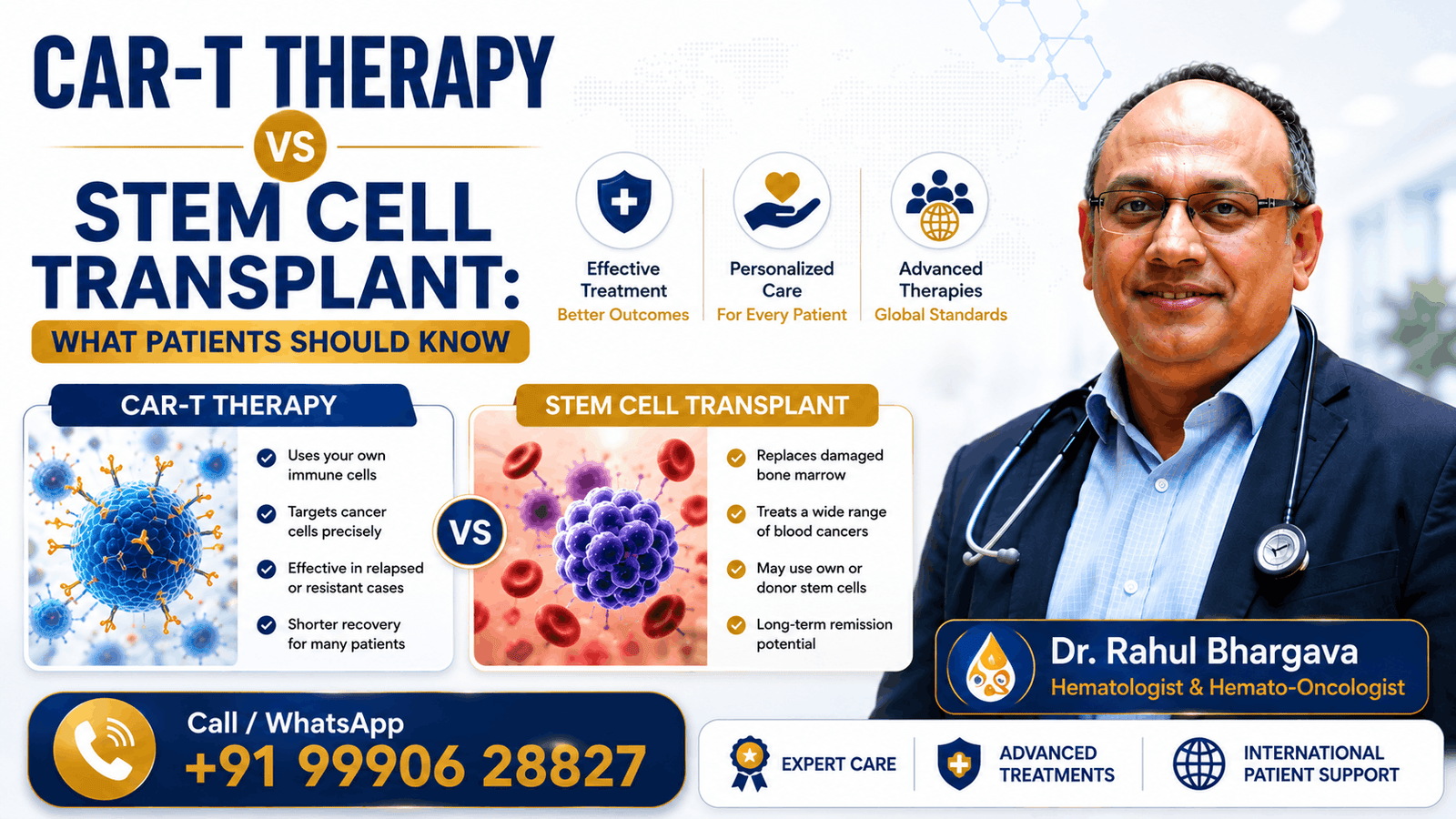
Table of Contents
Blood cancers and serious blood disorders can be very difficult for patients and their families. Thanks to medical advances, treatments like CAR-T therapy and stem cell transplant (SCT) now offer hope. Although both aim to treat or cure these illnesses, they work in different ways.
Knowing how these treatments differ helps patients and caregivers make informed choices and get ready for what’s ahead.
This guide will explain how CAR-T therapy and stem cell transplants work, highlight their benefits and risks, and cover what to expect during recovery and important things to consider.
Blood cancers like leukemia, lymphoma, and multiple myeloma, as well as serious blood disorders such as aplastic anemia or thalassemia, can greatly impact a person’s quality of life. In the past, stem cell transplant was often the main treatment for these conditions and offered a chance for a cure.
Recently, CAR-T therapy has become an important new immunotherapy, giving hope to patients whose cancers have come back or haven’t responded to standard treatments. CAR-T therapy and traditional treatments are different in how they work, what recovery is like, the risks involved, and who they are best suited for.
This guide is written in clear, easy-to-understand language to help you learn about these complex treatment options.
Overview of CAR-T Therapy
CAR-T therapy (Chimeric Antigen Receptor T-cell therapy) is a personalized treatment that uses the patient’s own immune system to fight cancer.
How CAR-T Therapy Works
-
Collection of T-Cells: The patient’s T-cells (immune cells) are collected via a procedure called leukapheresis.
- Genetic Modification: In a laboratory, these T-cells are modified to express chimeric antigen receptors (CARs) that recognize specific markers on cancer cells.
- Expansion: The modified T-cells are multiplied in the lab to achieve sufficient numbers.
- Infusion Back into Patient: After chemotherapy to reduce cancer cells and make space for CAR-T cells, the engineered cells are infused back into the patient.
- Cancer Targeting: These CAR-T cells seek and destroy cancer cells, potentially leading to remission.
With CAR-T therapy, patients receive immune cells that have been specially designed to find and attack their cancer.
Indications and Eligibility
CAR-T therapy is most often recommended for patients whose cancer has come back or has not responded to standard treatments. It has shown remarkable success in several difficult-to-treat conditions, especially:
- Relapsed or refractory B-cell acute lymphoblastic leukemia (ALL)
- Certain types of Non-Hodgkin lymphoma
- Multiple myeloma, particularly in specific patient groups
Not all patients are eligible for CAR-T therapy. Eligibility is assessed to ensure safety and optimal outcomes. Physicians consider factors such as:
- Age and general health status, to make sure the patient can tolerate the treatment
- The type and stage of the disease, since CAR-T works better in certain cancers
- Previous treatments and how well the patient responded to them
- The patient’s ability to tolerate potential side effects, which may be serious
Benefits and Limitations
Benefits of CAR-T Therapy:
- Highly targeted approach with potential for long-term remission
- Usually requires a single infusion
- Can be life-saving when other treatments have failed
Limitations
- Can lead to serious side effects such as cytokine release syndrome (CRS) and neurological symptoms, which may require close monitoring
- Not suitable or effective for all types of blood cancers
- Patients usually need to stay in the hospital so doctors can watch them closely and manage any problems during treatment.
Overview of Stem Cell Transplant
A stem cell transplant (SCT) replaces unhealthy bone marrow with healthy stem cells, helping the body make normal blood cells and restore the immune system.
How Stem Cell Transplant Works
- Conditioning Therapy: High-dose chemotherapy or radiation eliminates diseased bone marrow and suppresses the immune system.
- Stem Cell Infusion: Healthy stem cells are transplanted from either the patient (autologous) or a donor (allogeneic).
- Engraftment: Stem cells travel to the bone marrow and begin producing healthy blood cells over weeks to months.
- Immune Recovery: The patient’s immune system gradually rebuilds, reducing the risk of infection over time.
A stem cell transplant helps restore healthy blood and immune function by swapping out diseased bone marrow for healthy cells.
Types of Stem Cell Transplant
|
Autologous |
Patient’s own stem cells |
Lower risk of immune complications, mainly for certain blood cancers |
|
Allogeneic |
Donor stem cells |
Can cure certain genetic disorders, higher risk of graft-versus-host disease (GVHD) |
Indications and Eligibility
Stem Cell Transplant is considered for:
- Blood cancers such as leukemia, lymphoma, and multiple myeloma.
- Bone marrow failure syndromes, like aplastic anemia.
- Genetic blood disorders, including thalassemia and sickle cell disease.
- Certain immune deficiencies.
Eligibility depends on:
- Age and overall health.
- Stage of the disease.
- Availability of a suitable donor (for allogeneic transplants).
- Ability to safely tolerate high-dose chemotherapy.
Benefits and Limitations
Benefits:
- Can potentially cure many blood cancers.
- Replaces damaged bone marrow with healthy stem cells.
- Can also treat some genetic disorders.
Limitations:
- This treatment is demanding and usually means a long recovery time.
- There is a risk of serious infections and potential organ toxicity during or after treatment.
- For donor transplants, there is a possibility of graft-versus-host disease (GVHD), which can be challenging to manage.
- Patients need regular, long-term checkups to make sure the transplant is working and to catch any problems early.
Key Differences Between CAR-T Therapy and Stem Cell Transplant
|
Mechanism |
Genetically engineered T-cells attack cancer |
Diseased bone marrow replaced with healthy stem cells |
|
Source |
Patient’s own T-cells |
Patient (autologous) or donor (allogeneic) stem cells |
|
Preparation |
Leukapheresis + lab modification |
High-dose chemotherapy ± radiation |
|
Infusion |
Single infusion |
Stem cell infusion after conditioning |
|
Target |
Specific cancer markers |
Entire bone marrow and immune system |
|
Hospital Stay |
1–2 weeks |
Several weeks |
|
Recovery |
Weeks for immune recovery |
Months for full immune recovery |
|
Side Effects |
CRS, neurotoxicity |
Infection, GVHD, organ toxicity |
|
Best Use |
Relapsed/refractory cancers |
First-line or high-risk cancers, genetic disorders |
Preparation and Procedure: What Patients Should Expect
CAR-T Therapy:
- Blood tests, imaging, and a full disease evaluation
- Leukapheresis to collect the patient’s T-cells
- Patients are admitted to the hospital for the CAR-T cell infusion and are watched closely during this time.
- Short-term chemotherapy to help reduce the cancer burden before infusion
Stem Cell Transplant:
-
Patients have a full checkup before the transplant to make sure they are ready for treatment.
- Receives high-dose chemotherapy or radiation (conditioning) to eliminate diseased cells
- Healthy stem cells are then infused into the patientPatients stay in hospital isolation for a while to lower the risk of infection when their immune system is weak.leLong-term follow-up is needed to check that the new cells are working and to help the immune system recover. recovery
Recovery and Post-Treatment Care
CAR-T Therapy:
-
The immune system is temporarily weakened.
- Patients require close monitoring for fever, low blood pressure, or neurological symptoms.
- Supportive care can include fluids, medicines, and sometimes a stay in the ICU for close monitoring.
Stem Cell Transplant:
-
The immune system slowly gets stronger over a few months.
- Because there is a high risk of infection, patients often need to stay in isolation and take medicines to prevent illness.
- Doctors do regular blood tests to check if the new stem cells are working.
- Patients need long-term follow-up to watch for graft-versus-host disease (GVHD) and other possible organ problems.
Side Effects and Risks
CAR-T Therapy:
-
Cytokine Release Syndrome (fever, low BP, fatigue)
- Neurological symptoms (confusion, seizures)
- Low blood counts and infections
Stem Cell Transplant:
-
High risk of infections while the immune system recovers.
- Possibility of graft-versus-host disease in donor transplants.
- Risk of organ toxicity affecting the heart, liver, or lungs.
- Recovery may be prolonged.
Effectiveness and Long-Term Outcomes
- CAR-T Therapy: CAR-T Therapy: CAR-T therapy has worked well, especially for patients with leukemia or lymphoma that has come back or not responded to other treatments. Many people go into long-term remission, so it’s a good choice for tough cases. This targeted treatment uses the patient’s own immune system to fight cancer and offers hope when other treatments haven’t worked.plant: Stem cell transplant is an established treatment that can cure many blood cancers and some genetic disorders. Its effectiveness depends on factors such as patient age, disease stage, and donor match. When successful, it restores healthy blood and immune function, offering long-term remission and improved quality of life.
Patient Considerations and Decision-Making
Factors to consider:
-
Type and stage of the disease, as well as how previous treatments responded.
- Patient’s age, overall health, and any other medical conditions.
- Availability of a suitable donor (for stem cell transplants).
- Ability to tolerate side effects related to the treatment.
- Length of hospital stay, recovery time, and impact on daily life.
- Cost and accessibility differences between CAR-T therapy and stem cell transplant.
Key Message:
Both CAR-T therapy and stem cell transplant are important treatments for serious blood disorders and cancers. CAR-T therapy works especially well for patients whose cancer has come back or hasn’t responded to other treatments, and it can lead to long-term remission. Stem cell transplant is a proven option that can cure many blood cancers and genetic disorders. The best choice depends on the type and stage of the disease, the patient’s health, whether a donor is available, and how well the patient can handle treatment. Both treatments offer hope and show how much medicine has advanced.
Conclusion
Both CAR-T therapy and stem cell transplant have greatly improved the outlook for people with blood cancers and serious blood disorders. CAR-T therapy is a targeted, immune-based treatment for cancers that have come back or are hard to treat, while stem cell transplant is still a key option that can cure many diseases.
Patients and families should collaborate with hematologists and oncologists to determine the most appropriate therapy, considering disease type, age, overall health, and treatment goals. Understanding the differences between therapies, potential side effects, and recovery expectations supports informed decision-making and improved outcomes.
Early consultation, thorough planning, and supportive care are essential for successfully navigating these advanced therapies.
Frequently Asked Questions
There is no single best option for everyone. CAR-T therapy is more targeted and generally less intensive, while a stem cell transplant can offer a broader curative potential depending on the condition.
Not yet. CAR-T therapy is usually reserved for patients whose cancer has returned or hasn’t responded to other treatments, while stem cell transplant continues to be the standard first-line option for curing many blood disorders.
CAR-T: Immune recovery usually takes a few weeks.
Stem Cell Transplant: Full recovery and immune rebuilding can take several months.
No. The infusion is similar to receiving a blood transfusion, though certain side effects may require hospitalization for monitoring and treatment.
Not always. Many transplants use the patient’s own stem cells (autologous), which is common for several cancers. Donor stem cells (allogeneic) are only needed for genetic disorders or certain high-risk cancers.
Yes. Both CAR-T therapy and stem cell transplants are available at advanced medical centers worldwide, though CAR-T is newer and not yet as widely accessible.
Insurance coverage varies by country, hospital, and type of therapy. CAR-T therapy is generally more costly because it is highly personalized for each patient.