Why Repeated Low Hemoglobin Should Never Be Ignored
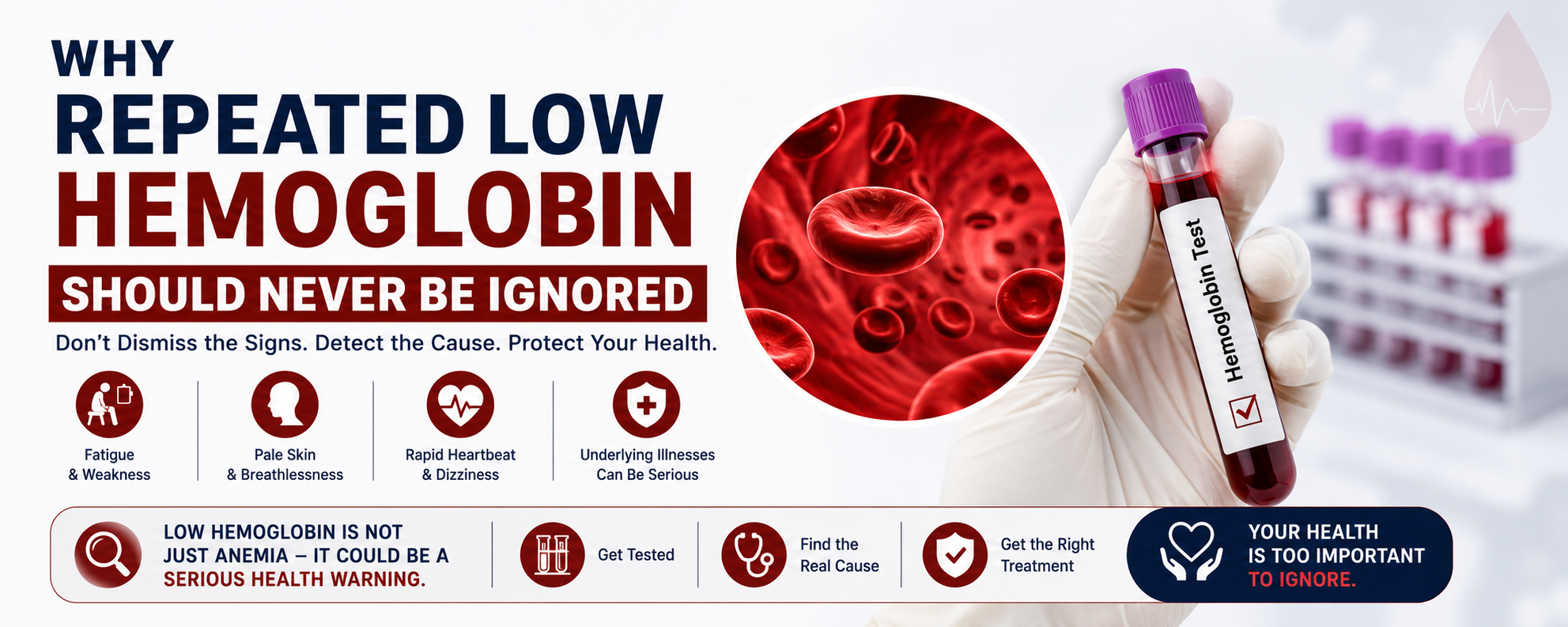
Table of Contents
Hemoglobin is one of the most essential components of blood because it plays a direct role in carrying oxygen from the lungs to every tissue and organ in the body. Without adequate hemoglobin, the body cannot maintain normal energy production, organ function, or cellular repair. Although many people hear the word “low hemoglobin” during a routine blood test and immediately associate it with simple anemia, repeated low hemoglobin should never be considered a minor issue. When hemoglobin levels continue to remain low or repeatedly drop after temporary improvement, it may indicate an underlying medical condition that needs detailed evaluation.
Many patients first notice symptoms such as fatigue, weakness, dizziness, pale skin, shortness of breath, or reduced stamina, but these signs are often ignored because they develop gradually. Some people continue daily activities despite feeling constantly tired, assuming that stress, poor sleep, or nutritional imbalance is the reason. However, when blood reports repeatedly show low hemoglobin, the body may be signaling a chronic internal problem such as nutritional deficiency, hidden blood loss, kidney disease, bone marrow dysfunction, autoimmune disease, or even blood cancer.
Repeated low hemoglobin is not a diagnosis by itself—it is a clinical warning sign. Understanding why hemoglobin remains low is far more important than simply trying to increase it temporarily through supplements. A proper medical assessment helps identify the real cause and prevents more serious complications later
Understanding Hemoglobin and Its Role in the Body
Hemoglobin is a protein present inside red blood cells. Its primary function is to bind oxygen in the lungs and deliver it to tissues throughout the body. At the same time, it helps carry carbon dioxide from tissues back to the lungs for exhalation.
This oxygen delivery system is essential because every organ—including the brain, heart, muscles, kidneys, and liver—depends on oxygen for normal function.
When hemoglobin falls below normal:
- Oxygen supply becomes insufficient
- Body organs begin to work under stress
- Energy production decreases
- Physical endurance drops
- Recovery from illness becomes slower
Even mild reductions can affect daily functioning if the drop continues for a long time.
Normal hemoglobin values vary depending on age, gender, and health condition, but persistent reduction always deserves medical attention.
Why Persistent Low Hemoglobin Should Be Taken Seriously
A temporary drop in hemoglobin can happen due to short-term illness, mild infection, recent blood loss, or nutritional deficiency. However, if hemoglobin repeatedly stays low despite treatment or falls again after improving, the body is usually dealing with an ongoing underlying issue.
Repeated low hemoglobin suggests that one of the following may be happening:
- The body is losing blood continuously
- Red blood cell production is insufficient
- Nutrients required for blood formation are lacking
- Bone marrow is unable to produce healthy blood cells
- Red blood cells are being destroyed faster than normal
In many cases, people take iron tablets repeatedly without finding out why the hemoglobin keeps dropping. This may temporarily improve blood reports but does not solve the actual cause.
Common Causes of Repeated Low Hemoglobin
Chronic Iron Deficiency
Iron deficiency remains one of the most common causes of low hemoglobin, but repeated iron deficiency often means there is an ongoing reason behind iron loss.
Possible causes include:
- Poor dietary intake
- Long-term inadequate nutrition
- Poor intestinal absorption
- Chronic blood loss
- Frequent pregnancies
- Heavy menstrual bleeding
In many adults, especially when iron deficiency continues despite supplementation, hidden gastrointestinal blood loss must be investigated carefully.
Vitamin B12 and Folate Deficiency
The body requires vitamin B12 and folate to produce healthy red blood cells.
Deficiency can develop due to:
- Poor nutritional intake
- Long-term vegetarian diets without supplementation
- Stomach disorders affecting absorption
- Intestinal disease
- Chronic gastritis
Without adequate B12 and folate, red blood cells become abnormal and ineffective, causing persistent anemia.
Hidden Internal Blood Loss
Some patients lose small amounts of blood regularly without obvious symptoms.
This can happen due to:
- Gastric ulcers
- Intestinal bleeding
- Colon polyps
- Piles
- Chronic gastritis
- Menstrual disorders
Because blood loss may be slow, symptoms often appear only when hemoglobin has fallen significantly.
This is one reason why repeated low hemoglobin should always be evaluated instead of treated casually.
Chronic Kidney Disease
The kidneys produce a hormone called erythropoietin, which stimulates the bone marrow to produce red blood cells.
When kidney function becomes impaired:
- Erythropoietin production decreases
- Red blood cell production slows down
- Hemoglobin remains persistently low
This type of anemia often needs treatment beyond iron supplementation.
Chronic Inflammatory Diseases
Long-standing inflammation in the body can suppress blood production.
Conditions that may cause this include:
- Autoimmune disorders
- Chronic infections
- Liver disease
- Rheumatological disorders
Inflammation interferes with iron utilization and blood formation even if nutritional intake appears adequate.
Bone Marrow Disorders
Bone marrow is the central site where blood cells are produced. If bone marrow function becomes impaired, repeated anemia may be one of the earliest signs.
Bone marrow-related causes include:
- Aplastic anemia
- Myelodysplastic syndrome
- Bone marrow suppression
- Bone marrow fibrosis
These conditions often need specialist hematology evaluation because they affect long-term blood production.
Blood Cancers
Repeated low hemoglobin can sometimes be an early sign of serious hematological disease.
Important blood cancers include:
In these conditions, abnormal cells interfere with normal bone marrow activity, reducing red blood cell production.
Patients may also experience:
- Fever
- Weight loss
- Frequent infections
- Bone pain
- Swollen lymph nodes
Because symptoms may initially appear mild, persistent low hemoglobin should never be ignored when associated with these warning signs.
Symptoms That Suggest Low Hemoglobin Needs Immediate Medical Attention
Repeated low hemoglobin becomes more concerning when symptoms begin affecting routine life.
Important symptoms include:
- Severe tiredness even after rest
- Shortness of breath during mild activity
- Rapid heartbeat
- Palpitations
- Headache
- Poor concentration
- Chest heaviness
- Dizziness
- Fainting tendency
These symptoms suggest that oxygen delivery is insufficient and should be medically assessed quickly.
Why Repeated Iron Supplements Without Investigation Can Be Risky
A common mistake is self-treatment with repeated iron tablets whenever fatigue develops.
This can be risky because:
- Iron may not be the actual problem
- Internal bleeding may remain undetected
- Bone marrow disorders may progress unnoticed
- Serious hematological disease may be diagnosed late
Repeated low hemoglobin always needs a complete blood evaluation before long-term supplementation continues.
Important Tests Used to Find the Cause
Doctors usually investigate repeated low hemoglobin through detailed testing.
These may include:
- Complete blood count (CBC)
- Peripheral blood smear
- Iron studies
- Ferritin levels
- Vitamin B12 testing
- Folate testing
- Reticulocyte count
- Kidney function tests
- Liver function tests
- Stool occult blood testing
- Bone marrow examination when necessary
These investigations help determine whether the issue is nutritional, inflammatory, marrow-related, or malignant.
When Hematology Consultation Becomes Necessary
A hematologist becomes especially important when:
- Hemoglobin remains low despite treatment
- White blood cells are abnormal
- Platelets are low
- Blood smear shows abnormal cells
- Repeated transfusions become necessary
Specialist evaluation helps identify complex blood disorders early.
Dr. Rahul Bhargava has extensive experience in diagnosing and treating complex blood disorders, bone marrow diseases, and hematological conditions where repeated anemia may be the first warning sign.
For patients with unexplained recurrent low hemoglobin, hematology consultation helps ensure that treatment targets the actual cause rather than temporary correction alone.
Can Repeated Low Hemoglobin Affect the Heart and Brain?
Yes. Long-standing anemia places continuous strain on major organs.
Possible effects include:
- Increased heart workload
- Reduced concentration
- Memory issues
- Poor physical stamina
- Reduced immunity
- Delayed healing
In severe anemia, even normal daily activities can become difficult.
Can Repeated Low Hemoglobin Be Fully Treated?
In many cases, yes—but only when the underlying cause is identified correctly.
Treatment depends on diagnosis and may include:
- Iron replacement
- Vitamin therapy
- Management of blood loss
- Kidney support treatment
- Bone marrow therapy
- Treatment for blood disorders or cancer
The aim is not simply to raise hemoglobin temporarily but to prevent repeated decline.
Conclusion
Repeated low hemoglobin should never be dismissed as a minor nutritional issue. While many cases begin with fatigue or weakness, persistent anemia may be an early sign of chronic blood loss, nutritional deficiency, kidney disease, bone marrow dysfunction, autoimmune disease, or blood cancer.
The body often gives early warning signs through repeated abnormal blood reports. Identifying the reason early allows treatment before complications become severe.
A proper medical evaluation, especially when hemoglobin remains low repeatedly, is one of the most important steps in protecting long-term health and preventing delayed diagnosis
Frequently Asked Questions
Repeated low hemoglobin usually indicates an underlying condition such as chronic iron deficiency, hidden blood loss, vitamin deficiency, kidney disease, bone marrow disorders, or blood-related illness that requires medical evaluation.
Yes, persistent low hemoglobin can become serious because reduced oxygen delivery affects major organs such as the heart, brain, and kidneys, and in some cases may signal serious hematological disease.
If hemoglobin falls again after iron treatment, the root cause may still be present, such as internal bleeding, poor absorption, chronic inflammation, or another blood production disorder.
Doctors usually recommend complete blood count, iron studies, ferritin, vitamin B12, folate, kidney function tests, stool occult blood testing, and sometimes bone marrow examination.
In some patients, repeated low hemoglobin may be an early sign of conditions such as leukemia, lymphoma, or multiple myeloma, especially when associated with weakness, infections, weight loss, or abnormal blood reports.