Different Types of Anaemia You Should Know About
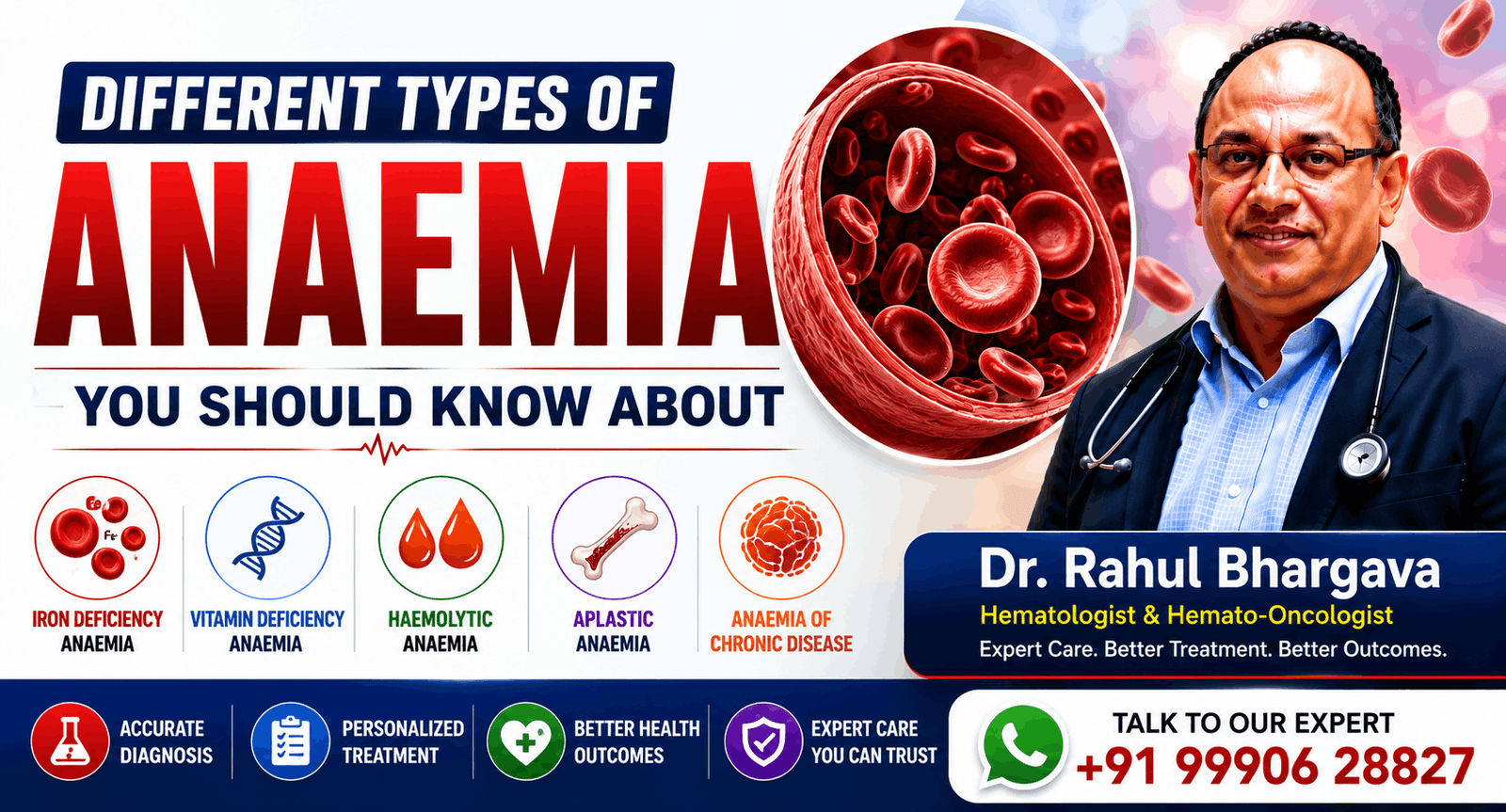
Table of Contents
Anaemia is a widespread yet often misunderstood blood disorder that affects millions of people globally. According to the World Health Organization (WHO), anaemia impacts children, women of reproductive age, pregnant women, and the elderly more frequently, but it can affect anyone. While iron deficiency is the most common cause, anaemia is not a single disease—it includes several distinct types, each with unique causes, clinical features, and treatment approaches.
This comprehensive guide explains the different types of anaemia, helping you understand how they develop, how they are diagnosed, and how they are treated.
What Is Anaemia?
Anaemia is a condition in which the body lacks sufficient healthy red blood cells (RBCs) or hemoglobin to transport oxygen effectively to tissues and organs. Hemoglobin is an iron-rich protein in red blood cells that binds oxygen in the lungs and releases it throughout the body.
When oxygen delivery is reduced, vital organs begin to function poorly, leading to symptoms ranging from mild fatigue to life-threatening complications.
Why Anaemia Should Not Be Ignored
Untreated anaemia can lead to:
- Reduced physical and mental performance
- Increased risk of infections
- Pregnancy complications (low birth weight, preterm delivery)
- Heart problems such as arrhythmias or heart failure
- Delayed growth and development in children
Early identification and targeted treatment are crucial to prevent long-term damage.
Common Symptoms of Anaemia
Symptoms may develop gradually or suddenly, depending on the type and severity.
General Symptoms:
- Chronic fatigue and weakness
- Pale skin, gums, or nail beds
- Shortness of breath
- Dizziness or lightheadedness
- Headaches
- Rapid or irregular heartbeat
Severe or Advanced Symptoms:
- Chest pain
- Cold hands and feet
- Difficulty concentrating
- Fainting episodes
Classification of Anaemia
Anaemia can be broadly classified based on:
- Nutritional deficiencies
- Bone marrow failure
- Increased destruction of red blood cells
- Genetic or inherited disorders
- Chronic medical conditions
Let’s explore each type in detail.
1. Iron Deficiency Anaemia
Iron deficiency anaemia is the most prevalent form of anaemia worldwide and a major public health concern.
Causes:
- Inadequate dietary iron intake
- Chronic blood loss (heavy menstrual bleeding, ulcers, hemorrhoids)
- Gastrointestinal disorders affecting absorption
- Increased iron requirements during pregnancy
Pathophysiology:
Iron is essential for hemoglobin synthesis. Without enough iron, red blood cells become smaller (microcytic) and carry less oxygen.
Symptoms:
- Extreme tiredness
- Hair thinning or hair loss
- Brittle nails
- Pica (craving for non-food items like clay or ice)
Treatment:
- Oral iron supplementation
- Intravenous iron therapy (in severe or malabsorption cases)
- Treating the source of blood loss
2. Vitamin Deficiency Anaemia
Vitamin deficiency anaemia occurs due to inadequate levels of vitamins required for red blood cell production.
A. Vitamin B12 Deficiency Anaemia
Vitamin B12 is essential for DNA synthesis and neurological function.
Causes:
- Poor dietary intake (especially in strict vegetarians)
- Pernicious anaemia
- Gastric surgery
- Malabsorption syndromes
Neurological Symptoms:
- Tingling or numbness in limbs
- Memory impairment
- Difficulty walking
- Mood changes
Treatment:
- Vitamin B12 injections
- Oral supplementation in mild cases
B. Folate (Vitamin B9) Deficiency Anaemia
Folate is vital for rapid cell division and growth.
Risk Factors:
- Poor nutrition
- Pregnancy
- Alcohol dependence
- Certain medications
Treatment:
- Oral folic acid supplementation
- Dietary improvements
3. Aplastic Anaemia
Aplastic anaemia is a rare but life-threatening disorder where the bone marrow fails to produce sufficient blood cells.
Causes:
- Autoimmune disorders
- Chemotherapy or radiation exposure
- Viral infections (e.g., hepatitis, HIV)
- Idiopathic (unknown cause)
Clinical Features:
- Severe fatigue
- Frequent infections
- Easy bruising or bleeding
Management:
- Immunosuppressive therapy
- Bone marrow or stem cell transplantation
- Supportive blood transfusions
4. Hemolytic Anaemia
Hemolytic anaemia occurs when red blood cells are destroyed prematurely.
Types:
- Autoimmune hemolytic anaemia
- Drug-induced hemolytic anaemia
- Infection-related hemolysis
Symptoms:
- Jaundice
- Dark urine
- Enlarged spleen
Treatment:
- Corticosteroids
- Immunotherapy
- Splenectomy in selected cases
5. Sickle Cell Anaemia
Sickle cell anaemia is an inherited hemoglobin disorder.
Pathology:
Abnormal hemoglobin causes red blood cells to become rigid and sickle-shaped, leading to vessel blockage.
Complications:
- Severe pain crises
- Recurrent infections
- Stroke
- Organ damage
Treatment:
- Pain management
- Hydroxyurea therapy
- Blood transfusions
- Curative bone marrow transplant in select patients
6. Thalassemia
Thalassemia is a genetic disorder affecting hemoglobin synthesis.
Types:
- Alpha thalassemia
- Beta thalassemia (minor, intermedia, major)
Clinical Severity:
- Mild anaemia in thalassemia minor
- Transfusion-dependent anaemia in thalassemia major
Management:
- Regular blood transfusions
- Iron chelation therapy
- Stem cell transplant in severe cases
7. Anaemia of Chronic Disease
This type develops due to chronic inflammation or long-term illness.
Associated Conditions:
- Chronic kidney disease
- Rheumatoid arthritis
- Tuberculosis
- Cancer
Key Feature:
Iron is present in the body but cannot be effectively used for red blood cell production.
Treatment:
- Managing the underlying condition
- Erythropoietin injections when indicated
8. Pernicious Anaemia
Pernicious anaemia is an autoimmune condition that prevents vitamin B12 absorption.
Mechanism:
The body lacks intrinsic factor, a protein necessary for B12 absorption.
Long-Term Risks:
- Permanent nerve damage
- Cognitive decline
Treatment:
- Lifelong vitamin B12 therapy
How Is Anaemia Diagnosed?
Diagnosis involves a stepwise evaluation:
- Complete Blood Count (CBC)
- Peripheral blood smear
- Iron profile
- Vitamin B12 and folate levels
- Reticulocyte count
- Bone marrow examination (if required)
Prevention of Anaemia
Preventive strategies include:
- Balanced diet rich in iron, vitamins, and proteins
- Routine blood tests for high-risk individuals
- Prenatal screening during pregnancy
- Genetic counseling for inherited anaemias
When Should You Consult a Specialist?
Immediate medical attention is advised if you experience:
- Persistent fatigue despite rest
- Breathlessness at rest
- Unexplained weight loss
- Neurological symptoms
- Recurrent infections
Final Thoughts
Anaemia is a complex medical condition with multiple subtypes, each requiring a specific diagnostic and treatment approach. Understanding the different types of anaemia helps patients seek timely care and avoid complications. With expert medical guidance, most anaemias are manageable—and many are completely treatable.
If symptoms persist or worsen, consulting a qualified physician or hematologist is essential for accurate diagnosis and personalized treatment.
Frequently Asked Questions
Anaemia is a condition where the blood has low hemoglobin or red blood cells, reducing oxygen supply to the body.
Common anaemia symptoms include fatigue, weakness, pale skin, shortness of breath, dizziness, and rapid heartbeat.
Iron deficiency anaemia is the most common type worldwide, usually caused by low iron intake or blood loss.
Yes, untreated anaemia can cause heart problems, pregnancy complications, infections, and delayed growth in children
Anaemia is diagnosed using blood tests such as a complete blood count (CBC), iron studies, and vitamin B12 or folate levels.
Many types of anaemia are completely treatable or manageable with proper diagnosis, supplements, medications, or advanced therapies like transfusion or bone marrow transplant.