Matched Unrelated Donor (MUD) Transplant Explained: Finding the Right Donor Outside the Family
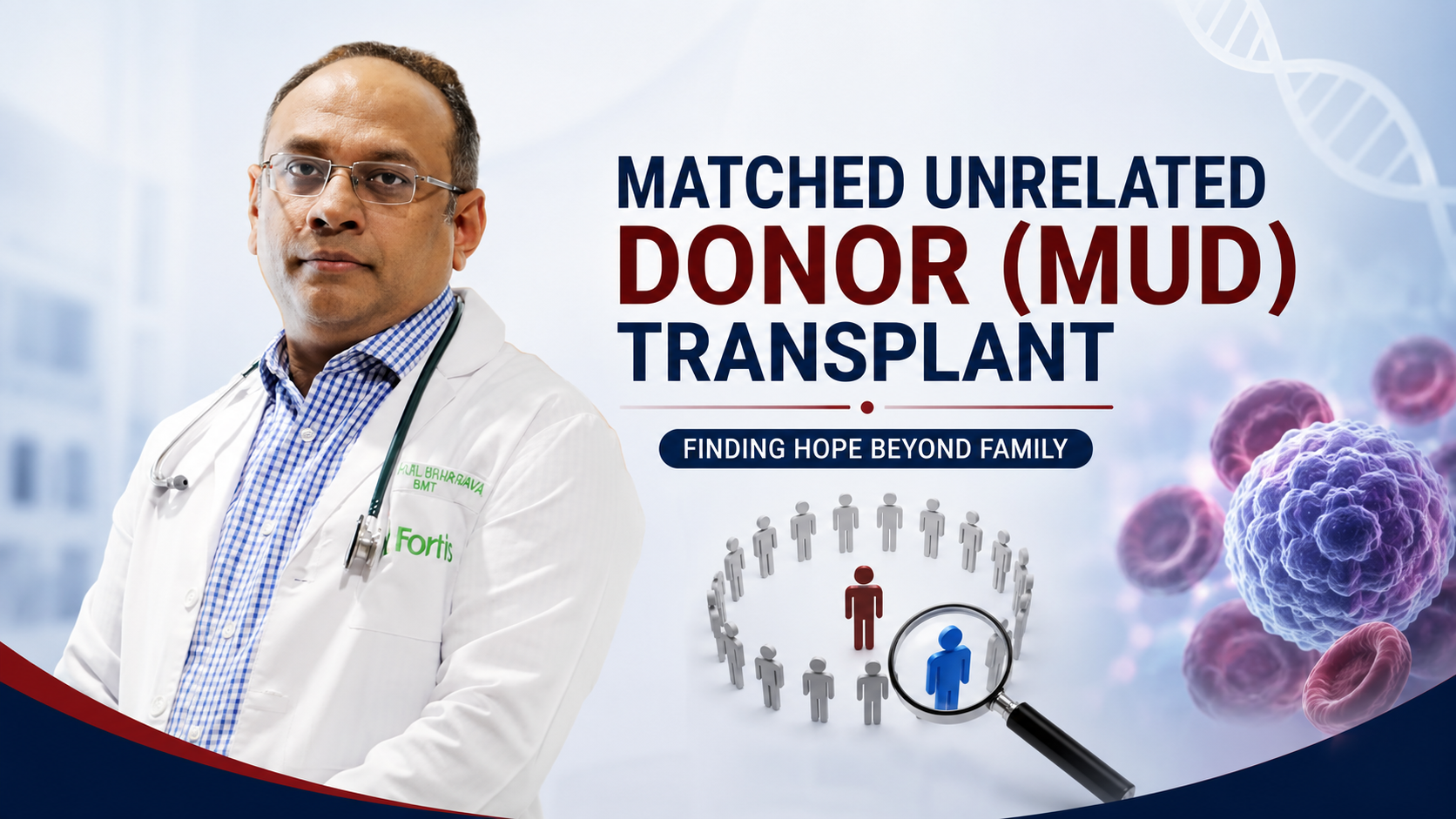
Table of Contents
What Is a Matched Unrelated Donor (MUD) Transplant?
Bone marrow and stem cell transplants can save the lives of people with blood cancers, bone marrow failure, immune problems, and certain genetic blood diseases. Many patients get transplants from relatives, like siblings, but not everyone has a matching family member. For these patients, a matched unrelated donor transplant, or MUD transplant, may be a possible cure.
This guide explains what a MUD transplant is, how it works, its benefits and risks, who is eligible, what recovery involves, and new advances that have made the procedure safer and more effective.
Understanding Matched Unrelated Donor (MUD) Transplant
A matched unrelated donor transplant uses stem cells from a healthy person who is not related to the patient. Doctors match donors and recipients using special genetic markers called human leukocyte antigens (HLA). These are proteins on the surface of cells that help the immune system recognize which cells belong in the body and which do not.
The success of a MUD transplant depends on how closely the donor’s HLA matches the patient’s. A close match lowers the risk of problems like graft-versus-host disease (GVHD) and helps the new stem cells take hold in the body.
Who Needs a Matched Unrelated Donor MUD Transplant?
MUD transplants are often recommended for patients who:
• Do not have a suitable related donor, such as a sibling
• Have leukemia, lymphoma, myelodysplastic syndrome, or aplastic anemia
• Have certain inherited blood or immune disorders
• Require an allogeneic transplant, where a donor's immune system is necessary to fight the disease
For many people, a MUD transplant may be their only chance for a cure.
How Are Matched Unrelated Donors Found?
To find a matched unrelated donor, doctors search donor registries. There are large registries around the world, such as:
• Be The Match in the United States
• Anthony Nolan in the United Kingdom
• WMDA (World Marrow Donor Association) for international donor coordination
These registries keep detailed HLA information for millions of volunteers. When someone needs a transplant, their HLA type is checked against the registry to find the best possible match. Newer, high-resolution HLA testing has made matching much more accurate.
While many patients do find a match, it can take weeks or even months to find the right donor. This process can take longer for people from ethnic minorities or less-represented groups.
How HLA Matching Works
People inherit HLA genes from both parents, and there are six main HLA markers that doctors try to match: HLA-A, HLA-B, HLA-C, HLA-DR, HLA-DQ, and HLA-DP. A perfect match lowers the risk of rejection and other problems.
If a perfect 10/10 match isn’t available, doctors may consider other options:
• A 9/10 or 8/10 match, which can still work in many cases
• A haploidentical or half-matched transplant if no closely matched donor is found
Thanks to improvements in graft processing and immune-suppressing treatments, these partial matches are now much safer and more successful than in the past.
The Matched Unrelated Donor (MUD) Transplant Process
The transplant process typically includes the following steps:
Pre-Transplant Evaluation
Before a transplant, patients go through a detailed evaluation to make sure they are healthy enough for the procedure. This usually includes:
• Blood tests to check how the organs are working
• Imaging scans to look at the heart, lungs, and liver
• Screening for infections
• Assessment of the current disease status
Doctors also discuss the risks, benefits, and other treatment options with patients and their families to help them make informed decisions.
Conditioning Therapy
Conditioning therapy prepares the patient’s body to receive donor stem cells. It may include:
• High-dose chemotherapy to destroy diseased bone marrow
• Radiation therapy in some cases
• Immunosuppressive therapy to prevent the patient’s immune system from attacking the donor cells
Some patients get a lower-intensity conditioning treatment to reduce side effects, especially if they are older or have other health issues.
Stem Cell Collection and Infusion
Once a donor is identified:
• Peripheral blood stem cells are collected via apheresis, which is similar to donating blood
• Alternatively, stem cells may be collected directly from bone marrow
• The collected cells are tested, processed, and shipped to the transplant center
• The patient receives the stem cells intravenously, similar to a blood transfusion
Engraftment
After the stem cells are given, they move to the bone marrow and start making new blood cells. This process, called engraftment, usually happens in 2 to 4 weeks. During this time, doctors watch closely for infections, bleeding, or other problems.
Benefits of a Matched Unrelated Donor (MUD) Transplant
A transplant from a matched unrelated donor offers several benefits:
• Offers more donor options for patients without a family match
• Can potentially cure blood cancers and inherited disorders
• Donor immune cells may attack any remaining cancer cells, known as the graft-versus-leukemia effect
• Better HLA matching, improved care, and careful follow-up have contributed to higher survival rates
Overall, MUD transplants give many patients a chance at long-term remission and improved quality of life.
Risks and Complications
While MUD transplants can be life-saving, they do come with some risks:
• Graft-versus-host disease (GVHD): donor immune cells may attack the patient’s body
• Infections: The immune system is weakened after transplant, making it easier to get infections.
• Organ effects: Chemotherapy or radiation can sometimes affect the heart, liver, or other organs.
• Graft failure: Occasionally, the donor cells do not successfully take hold.
• Relapse: The original disease may come back, especially if full remission wasn’t reached before the transplant.
Thanks to newer treatments, improved graft handling, and closer post-transplant monitoring, these risks are now much lower than they were with older methods.
Healing and Life After a MUD Transplant
Recovering after a MUD transplant usually takes longer than after a transplant using your own cells or a related donor’s cells. Careful follow-up is essential to ensure the body heals properly and the immune system recovers safely. Key parts of recovery include:
• Hospital stay: Usually 3 to 5 weeks, depending on any complications
• Immune system recovery: Can take 6 months to a year
• Regular monitoring: Blood tests, imaging, and infection checks
• GVHD management: Medications and early treatment to control symptoms
• Nutrition and physical rehabilitation: Helps regain strength and prevent complications
Patients often need ongoing check-ups for several years to monitor for late issues, such as chronic GVHD or new cancers, ensuring long-term health and recovery.
Advances Making MUD Transplants Safer and More Accessible
Recent developments have made matched unrelated donor (MUD) transplants safer and more accessible for patients. Better donor matching, gentler chemotherapy regimens, improved graft processing, and new ways to prevent complications like GVHD all contribute to safer procedures and quicker recovery. These innovations mean more patients can undergo transplant successfully with fewer risks and better outcomes. Recent innovations in MUD transplantation include:
High-Resolution HLA Typing
• Improved genetic testing allows better donor-patient matching
• Reduces risk of GVHD and graft failure
Haploidentical and Partially Matched Donors
• Safer half-matched transplants: Modern immunosuppressive treatments make it possible to safely use donors who share only half of the HLA markers
• More options for patients: This approach allows patients without a perfect matched unrelated donor to still receive a transplant
Graft Manipulation Techniques
• T-cell depletion: Helps lower the risk of GVHD
• CD34+ stem cell enrichment: Improves the chances that the donor cells will successfully take hold
• Cord blood expansion: Speeds up recovery for patients who don’t have adult donors available
Reduced-Intensity Conditioning
• Gentle on the body: Milder chemotherapy or radiation makes transplants safer for older or weaker patients
• Effective results: These gentler treatments still allow donor cells to take hold and help control the disease
Machine Learning and Predictive Care
• Predicting complications: Advanced computer tools can help foresee problems such as infections, relapse, or GVHD
• Tailored care: Doctors can use this information to create personalized treatment plans and act early to prevent or manage issues
Eligibility for a MUD Transplant
Not every patient is suitable for a MUD transplant. Eligibility factors include:
• Disease type and status
• Age and overall health
• Organ function
• Previous therapies and response to treatment
• Availability of a matched donor
Transplant centers do a thorough evaluation to see if a patient is a good candidate for a MUD transplant.
Finding a Donor When No Family Match Exists
If no sibling or related donor is available:
• Search international registries: Millions of volunteers are registered globally
• Consider cord blood: Especially useful when HLA matching is imperfect
• Explore haploidentical options: Family members sharing half of HLA markers may be suitable
It’s important to start looking for a donor early, since finding a good match can take weeks or even months.
Cost Considerations
MUD transplants are generally more expensive than related donor transplants because:
• Donor testing and matching are extensive
• Graft transportation and processing are required
• Hospital stay is often longer
• Post-transplant monitoring and medications are intensive
Insurance, government help, or patient assistance programs may lower the costs you have to pay yourself.
Emotional and Psychological Support
A MUD transplant isn’t just tough on the body, it can take a big toll on emotions too. Many patients and their families go through a roller-coaster of feelings, and that’s completely normal. Some of the common challenges include:
• Worry and anxiety: It’s natural to feel nervous about how the transplant will go, whether the donor will be a good match, or what complications might happen.
• Fear: Thoughts about GVHD or the disease coming back can make patients feel scared or uncertain about the future.
• Stress: Long hospital stays, strict routines, and constant check-ups can make the entire process feel tiring and overwhelming.
• Isolation and fatigue: Being away from home, friends, and daily life can feel lonely, and the physical tiredness from treatment adds to the emotional strain.
During this time, emotional support matters just as much as medical treatment. Speaking with a counselor, joining support groups, or simply leaning on family and friends can bring comfort and strength. Having people who listen, encourage, and stand by your side can make the whole journey feel less overwhelming and far less lonely.
Conclusion
A matched unrelated donor transplant is an important treatment for people who do not have a matching family donor. Although the procedure is complex and has risks, new advances in HLA matching, less intense conditioning, graft handling, and post-transplant care have made MUD transplants safer and more effective.
For people with leukemia, lymphoma, bone marrow failure, or genetic blood diseases, a MUD transplant may offer the best chance for long-term survival or a cure. Meeting with a transplant specialist early, searching donor registries, and preparing carefully are key steps for the best results.
MUD transplantation offers hope to patients worldwide who might otherwise have limited options. With continued research and innovation, this therapy will likely become even safer, more accessible, and more effective in the coming years.
Frequently Asked Questions
A related donor is a family member, usually a sibling, who may share HLA markers. A MUD is a healthy volunteer outside the family whose HLA closely matches the patient.
Finding a matched unrelated donor can take anywhere from a few weeks to several months, depending on the size of the donor registry and how common the patient’s HLA type is.
Yes. Thanks to modern immunosuppressive treatments and graft processing, 8/10 or 9/10 matches can sometimes be used safely.
In the past, yes. But with better matching, gentler conditioning, and improved post-transplant care, the risks are now much lower than before.
GVHD is a possible complication, but medications and early interventions help reduce both its severity and how likely it is to occur.
Yes. Most patients can resume daily activities, work, and their normal routines after recovery. Ongoing check-ups are important to monitor health and catch any long-term issues early.
Insurance coverage depends on your country and specific plan. In many cases, insurance covers part or even all of the transplant, especially since it is considered a life-saving treatment.