New Innovations in Bone Marrow Transplantation (2026 Update)
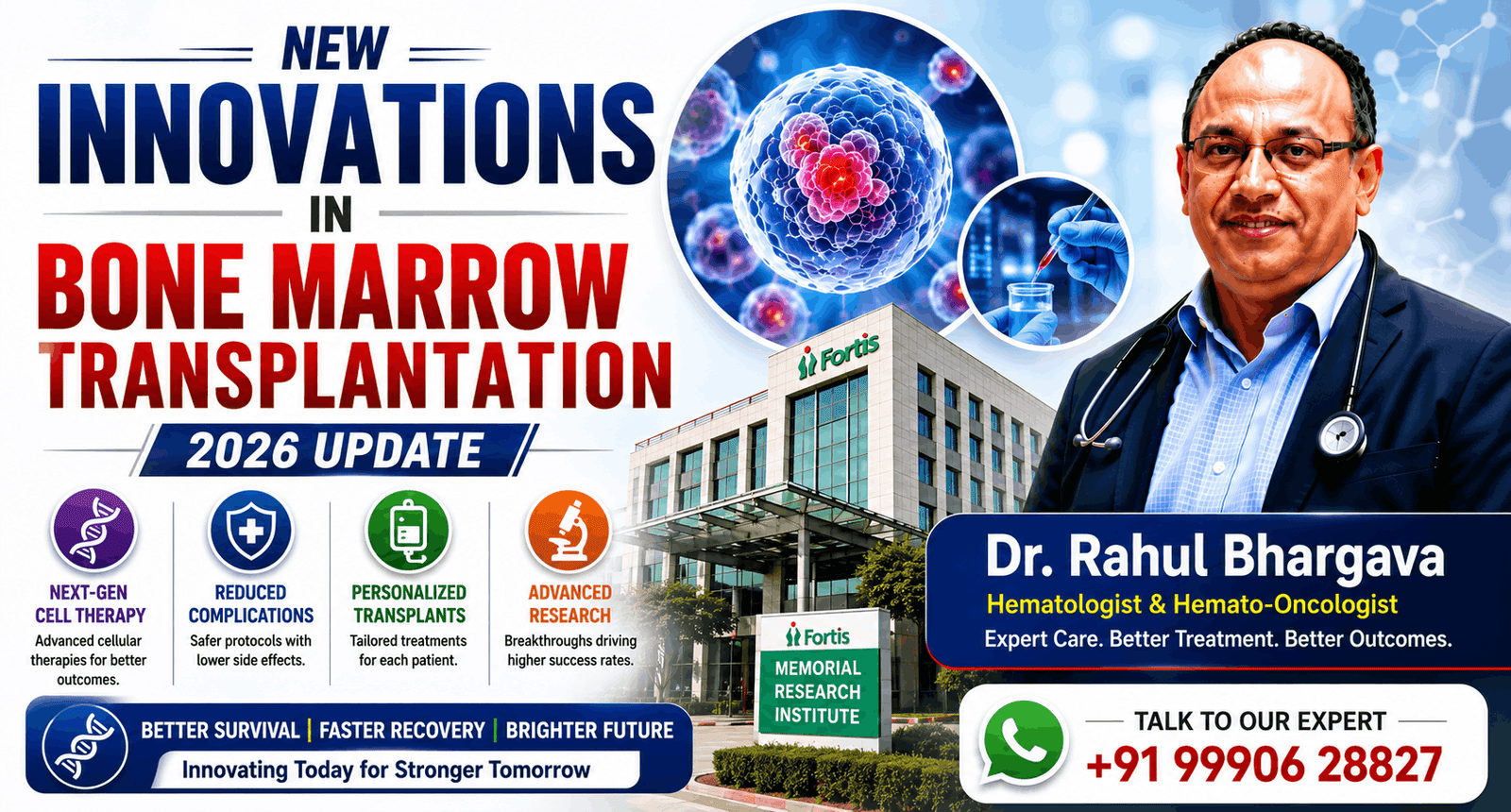
Table of Contents
Bone marrow transplantation, also called hematopoietic stem cell transplantation (HSCT), has been a life-saving treatment for patients with blood cancers, bone marrow failure, immune disorders, and inherited blood diseases. What was once a risky, last-resort procedure is now much safer, more reliable, and accessible to many more patients.
By 2026, new innovations are transforming how transplants are done. Advances range from collecting, storing, and expanding stem cells to preparing patients, matching donors, preventing complications, and even creating improved stem cells in the lab. This article highlights the most important developments, explains what they mean for patients, and offers a look at the future of bone marrow transplant therapy.
Why Innovation Matters in Bone Marrow Transplantation?
Historically, bone marrow transplants came with major challenges: intense chemotherapy or radiation, limited donor options, the risk of graft rejection or graft-versus-host disease (GVHD), long recoveries, infections, relapse, and restricted access for many patients.
Over time, steady improvements have made transplants safer and recovery smoother. With more donors available and better post-transplant care, patients heal faster, and transplants have become more successful and accessible to a broader range of people.
Today’s innovations are more transformative: some may broaden eligibility to older or frailer patients; others may reduce toxicity, speed up recovery, or make transplants possible when previously no donor match existed. The result: a new era of transplant medicine, more effective, safer, and more inclusive.
Easier Stem‑Cell Collection and Preservation
Peripheral Blood Stem Cell Harvest & Cryopreservation
Historically, bone marrow transplants required harvesting marrow directly from the pelvic bone — a somewhat invasive procedure. Now, peripheral blood stem cell (PBSC) harvest is standard: stem cells are mobilized to the bloodstream and collected via apheresis. This is less invasive, easier for donors, and more efficient.
Moreover, improvements in cryopreservation (freezing) mean harvested stem cells can be stored reliably for extended periods, giving more flexibility in transplant scheduling, donor availability, and logistics — especially important for patients from remote areas or countries with limited infrastructure.
Umbilical Cord Blood & Expanded Cord‑Blood Transplants
Another important development is using umbilical cord blood as a source of stem cells. Cord blood is plentiful, easy to collect after birth, and can often be used even if the donor and patient aren’t a perfect match, which lowers the risk of graft-versus-host disease (GVHD).
Recent breakthroughs have made cord-blood transplants even more effective. Doctors can now grow stem cells outside the body before the transplant to increase their numbers, or use two cord-blood units together. These advances help the body accept the transplant faster and recover its immune system more quickly.
These developments significantly expand the donor pool, a huge plus for patients without matched sibling or unrelated donors.
Reduced‑Intensity Conditioning (RIC): Safer Regimens for More Patients
One of the major historical barriers to transplant was the very aggressive “conditioning” of high-dose chemotherapy and/or radiation, used to wipe out diseased marrow. This was often intolerable for older patients or those with comorbidities.
Now, Reduced‑Intensity Conditioning (RIC) or “non-myeloablative” regimens are increasingly used. These milder preparative regimens allow older or frailer patients to undergo transplants with reduced toxicity, fewer side effects, and shorter hospital stays — greatly expanding eligibility.
This means patients who previously would have been deemed “too high risk” might now be eligible for transplant — a significant advance for equity and accessibility.
Better Donor Matching Techniques & Expanded Donor Options
High‑Resolution HLA Typing
Finding a donor with an HLA (human leukocyte antigen) type that closely matches the patient is one of the most important steps in a transplant. A close match lowers the risk of rejection and complications like GVHD. Today, advanced tests such as next-generation sequencing (NGS) and high-resolution HLA typing make it much easier for doctors to find the safest and most suitable donor.
This means that even donors from large, diverse registries can safely provide stem cells, making allogeneic transplants safer and more widely available.
Haploidentical (Half-Matched) Donors & Mismatched Donor Transplants
Another breakthrough: expanded use of haploidentical donors — typically family members sharing half the HLA markers — or other mismatched donors. What once would have been high-risk is now becoming feasible, thanks to improved conditioning, better immunosuppression, and more refined graft processing.
For many patients, this effectively means everyone has a potential donor. It democratizes transplant access — no longer limited to those with perfectly matched siblings or unrelated donors.
Processed Grafts to Reduce GVHD Risk
At places like Stanford Medicine, researchers have created new techniques to make donor grafts safer. They increase the number of CD34+ stem cells and remove certain alpha/beta T-cells, which are the immune cells most likely to cause GVHD. Because of this, doctors can now perform successful transplants even with half-matched donors, and the risk of serious immune complications becomes much lower.
This is an important step forward because it helps reduce, and possibly one day remove, one of the most feared problems in allogeneic transplants: GVHD. It also opens the door for more patients to find suitable donors.
Gene‑Edited & Laboratory‑Generated Stem Cells: Toward Customised, Safer Transplants
Perhaps the most futuristic and potentially game-changing innovations are in cell engineering and lab generation of transplantable stem cells.
Lab‑Grown Blood Stem Cells
In 2024, scientists at the Murdoch Children’s Research Institute (MCRI) announced a major breakthrough. They were able to create human blood stem cells in the lab that behave very much like natural hematopoietic stem cells. These lab-grown cells can form red blood cells, white blood cells, and platelets, just like the ones our body produces.
If these lab-grown HSCs (hematopoietic stem cells) can be safely used in humans, this could revolutionize transplant medicine: no donor needed, fewer matching concerns, and potentially “off-the-shelf” stem cell therapies.
Especially for children with leukemia or bone marrow failure disorders, this could dramatically broaden access to curative therapy.
Gene-Editing & “Enhanced” Stem Cells
Alongside the progress in lab-grown cells, gene-editing tools like CRISPR are also changing the future of transplants. These technologies can modify donor cells or even a patient’s own cells to make them more compatible, lower the chances of rejection, and even fix certain genetic problems before the transplant happens.
For patients with inherited blood disorders (e.g., certain types of immunodeficiency, thalassemia, sickle cell disease), this opens the possibility of personalized transplant, fixing the underlying genetic problem while restoring healthy bone marrow.
As gene-editing tools continue to become safer and more accurate, we may one day see specially engineered stem cell grafts. These grafts could be built to attach more effectively, be easily accepted by the body, and even help prevent certain diseases before they start.
Smarter Data & Predictive Medicine: Machine Learning for Transplant Outcomes
In 2024, a team at St. Jude Children’s Research Hospital demonstrated the power of machine learning (ML) applied to transplant medicine. By feeding over 100 daily clinical variables (from blood tests, vitals, imaging, etc.) into a predictive ML model, they were able to predict which patients are most at risk of poor outcomes, within 100 days, 1 year, and 2 years post-transplant with far greater accuracy than older models.
Why does this matter? Because early prediction of complications (infections, graft failure, GVHD, relapse, organ failure) enables doctors to intervene preemptively, adjust immunosuppression, tailor supportive care, or monitor more intensively.
In simple terms, follow-up after a transplant is no longer a one-size-fits-all approach. It’s becoming more personalized, more data-driven, and much more proactive.
Post‑Transplant Care & GVHD Reduction: New Protocols Improving Long-Term Survival
Even with a perfect donor match, GVHD and other post-transplant complications can still be a big hurdle. But there’s encouraging news. In 2025, a major clinical trial led by Monash University and the Australasian Leukemia & Lymphoma Group (ALLG) found that a newer, gentler post-transplant drug routine can make a huge difference.
According to the study, patients using this updated treatment were three times more likely to be alive and free from GVHD three years after transplant compared to those on the standard approach. This is a major step forward for people undergoing transplants for blood cancers.
This is perhaps one of the most important clinical advances: not only are we saving more lives, but we are improving quality of life, reducing chronic complications, minimizing immunosuppression, and enabling more patients to return to normal life.
Other innovations include improved immunosuppressive drugs, better supportive care regimens, and refined protocols for infection prophylaxis.
Emerging Concepts: Microtransplantation & Mixed‑Chimerism Approaches
Beyond the traditional high-dose transplants, researchers are now looking at gentler and less intense options. One of the most promising is microtransplantation (MST). In this approach, patients receive donor peripheral blood stem cells after a lower chemotherapy dose, and the donor doesn’t need to be a close HLA match. Instead of wiping out the entire bone marrow, MST creates a mixed state called microchimerism, where a small number of donor cells live alongside the patient’s own cells. This shared balance helps the immune system fight cancer more naturally, with fewer risks and side effects than a full transplant.
The possible benefits are significant: lower risk of transplant-related complications, a much smaller chance of developing GVHD, faster recovery, and the need for less aggressive treatment before the transplant. This could make the procedure safer and more accessible for people who are older, weaker, or not able to undergo standard transplant methods.
Such innovations represent a shift in thinking: from “yes/no” transplant eligibility to a spectrum of transplantation options tailored to individual patient needs.
What 2026’s Innovations Mean for Patients: Expanded Access, More Options, Better Outcomes
Putting it all together, what do these innovations mean for a patient considering bone marrow transplant today (or in the near future)?
- Greater donor availability. With expanded registries, cord‑blood options, haploidentical donors, and lab-grown/gene-edited cells, many more patients will find compatible grafts.
- Lower toxicity and risks. Reduced-intensity conditioning, better GVHD prophylaxis, improved supportive care mean even older or sicker patients may safely undergo transplant.
- Better long-term health. New post-transplant regimens reduce chronic complications; improved immunosuppression and predictive monitoring reduce relapse and long-term organ damage.
- Personalized transplant planning. Machine learning helps predict risk and guide therapy; gene‑edited cells may tackle genetic diseases; grafts can be tailored to patient’s needs.
- Broader therapeutic scope. What was once limited to malignant diseases is expanding to bone marrow failure, genetic blood diseases, immune disorders, and even regenerative medicine applications (as lab-grown stem cells become available).
In short, bone marrow transplant is no longer seen as a risky, last-chance option. For many patients and conditions, it is now becoming a safer, more personalized, and far more accessible treatment than ever before.
Challenges & What’s Still Evolving?
Of course, many of these innovations are still new, and some remain in clinical trials or early adoption phases. Challenges remain:
- Long-term safety of lab-grown or gene-edited stem cells; we need more data on engraftment stability, mutation risks, and immune behavior over decades.
- Global access and infrastructure: Transplants need skilled staff, proper labs, and funding for things like graft processing, cord-blood banking, and careful monitoring, but these resources are limited in many parts of the world.
- Donor registries and diversity: Many populations are still underrepresented in global donor registries, which makes finding a match harder. Expanding these registries, especially for diverse and underrepresented groups, is very important.
- Regulatory, ethical, and logistical challenges. Gene editing, lab-grown grafts, and novel conditioning regimens will require regulatory approvals, long-term follow-up, and perhaps new guidelines.
- Cost. Advanced protocols, cell processing, immunosuppressive drugs, and supportive care can be expensive. Ensuring affordability — especially in low‑ and middle-income countries — remains a key challenge.
Nevertheless, the pace of innovation gives hope that many of these barriers will shrink over time.
What Patients Should Ask Their Doctors in 2026 for Bone Marrow Transplantation?
If you or a loved one is considering a bone marrow transplant today, here are some important questions (in light of new innovations) you might ask your transplant team:
- Are there haploidentical or cord-blood donor options available for me?
Even if you don’t have a matched sibling, new donor sources may make transplant feasible. - Is reduced-intensity conditioning (RIC) an option?
Especially relevant if you are older or have comorbid conditions. - What medicines or post-transplant care do you use to reduce the risk of GVHD and other long-term complications?
- Can donor grafts be modified, such as removing certain T cells or enriching stem cells, to make the transplant safer?
- Are there any clinical trials with lab-grown or gene-edited stem cells that I might be eligible for?
- What experience does your center have with transplants in high-risk or older patients, and what have the outcomes been?
- What kind of supportive care, follow-up, and long-term monitoring do you provide after a transplant?
- What are realistic expectations for recovery time, quality of life, and relapse risk given new protocols?
Asking these questions helps you and your medical team make informed decisions and create a treatment plan that’s tailored to your needs.
The Future: What’s Next in Bone Marrow Transplantation After 2026?
Looking ahead, the next few years could bring even more transformative changes:
- “Off-the-shelf” lab-grown stem cell therapies: As lab-grown stem cells become safer and proven in clinics, future transplants might not need a donor at all. Patients could receive ready-made, banked stem cells.
- Gene-edited grafts for inherited blood disorders: In the future, patients with conditions such as thalassemia, sickle cell disease, or immune deficiencies may receive stem cells that are fully corrected and much less likely to be rejected.
- Personalized transplant plans: In the future, doctors could customize chemotherapy, immune-suppressing medicines, and follow-up care for each patient, helping make transplants safer and more successful.
- Alternative transplant approaches: Methods like microtransplantation, mixed chimerism, or gentler conditioning treatments could make transplants safer and more accessible for patients around the world.
- Global expansion of cord‑blood banks and donor registries: With greater diversity in donor representation and cord‑blood banking, more patients worldwide will find suitable matches.
- Better accessibility in resource-limited settings: As protocols simplify and costs drop, more hospitals (even in low/middle-income countries) may offer safe transplants.
In other words, the transplant of 2030 may feel very different from that of 2010, more like a standard, safe, widely available therapy than a rare, high-risk treatment.
Why 2026 Is a Turning Point?
Bone marrow transplantation is no longer just about donor scarcity, high toxicity, and risks. Thanks to advances in cell biology, immunology, data science, and drug development, 2025 marks a turning point:
- More donors and newer donor sources mean more patients can actually receive the transplant they need.
- Safer, less toxic treatments — including gentler conditioning- allow more people, even older or medically fragile patients, to qualify.
- Better graft processing, improved immune-suppressing medicines, and stronger post-transplant care are helping reduce risks like GVHD and relapse.
- Lab-grown and gene-edited stem cells may eventually remove the need for a donor altogether.
- More data-driven, personalized approaches are helping doctors choose the best plan for each patient and improve overall outcomes.
For patients, this translates to more hope, more options, and better chances of success. For doctors, it means having more tools to customize treatment for each individual. And for the medical community and society as a whole, it means bringing life-saving transplants within reach of many more people worldwide.
Moving Into a New Era of Transplant Medicine
Bone marrow transplant has come a long way. Earlier, it meant painful procedures, few donor options, and very intense treatments. Today, the process is much safer, gentler, and far more effective, giving patients real hope and better outcomes than ever before. Today, we are stepping into a new era where a transplant is no longer just a last resort or a risky choice. It is becoming a strong, adaptable, and increasingly safe treatment that could soon be available to many more people.
If you or a loved one need a transplant, or are simply exploring your options, speak with an experienced hematologist or transplant physician about the latest innovations. What was once considered impossible is now often within reach.
The future of bone marrow transplant is brighter than ever, offering not just remission, but real hope for many patients.
Frequently Asked Questions
Recent advances include:
- Lab-grown and gene-edited stem cells for safer transplants
- Gentler conditioning treatments to reduce side effects
- Half-matched or mismatched donor options to make transplants more widely available
- Improved cord blood transplants for better engraftment and recovery
- Personalized care and monitoring to lower the risk of complications like GVHD
Reduced-intensity conditioning, or RIC, is a gentler chemotherapy or radiation given before a transplant. It helps older or weaker patients safely receive a transplant while still allowing the new stem cells to grow and fight the disease.
Lab-grown stem cells can be created without a donor, which may one day eliminate the need to search for a match. Gene-edited stem cells can fix genetic problems or make the cells more compatible with the patient. This could lower the risk of rejection and offer new treatment options for inherited blood disorders.
A haploidentical transplant uses a donor who matches only half of your HLA markers, usually a parent, child, or sibling. Thanks to better graft preparation and improved immune-suppressing medications, this type of transplant has become much safer. It now allows many patients who cannot find a fully matched donor to still receive a successful transplant
Machine learning models analyze hundreds of patient variables to predict risks such as graft failure, infections, relapse, and GVHD. This enables personalized care, early interventions, and better outcomes
GVHD happens when the donor’s immune cells see the patient’s body as foreign and start attacking it. Newer techniques like T cell depletion, CD34+ stem cell selection, and improved immunosuppressive care have made GVHD much less common and often less severe than it used to be.