Stem Cell Transplant: A Comprehensive Guide to Procedure, Benefits, and Recovery
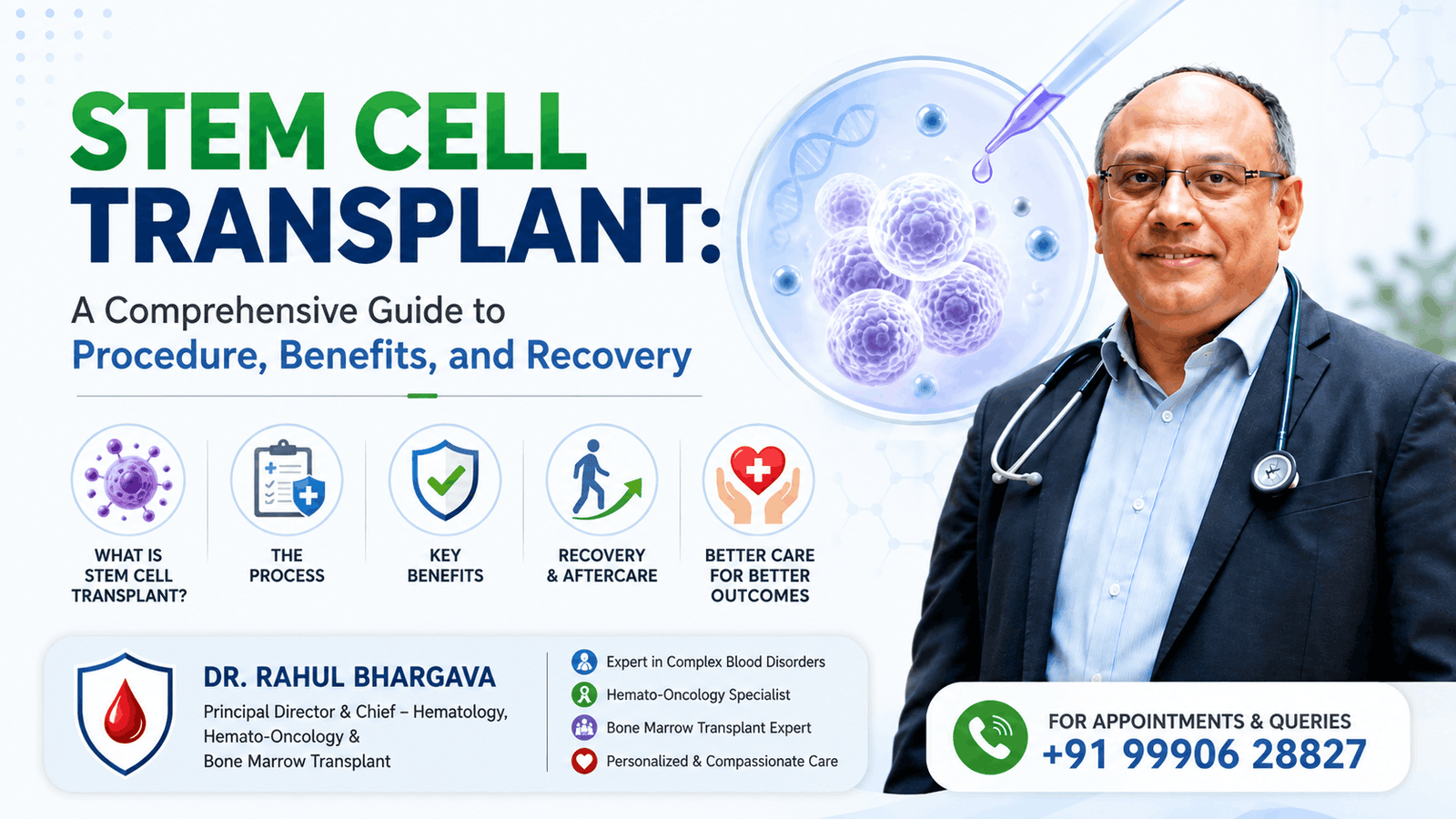
Table of Contents
Stem cell transplant, also known as a bone marrow transplant (BMT) or hematopoietic stem cell transplant (HSCT), is an advanced treatment used for several blood cancers, bone marrow disorders, immune deficiencies, and certain genetic conditions. For many patients, it offers the possibility of long-term disease control and, in some cases, cure.
A stem cell transplant can sound overwhelming. Patients and families often have questions such as: What exactly happens during the transplant? Where do the stem cells come from? How long does recovery take? What are the risks?
In this comprehensive guide, Dr. Rahul Bhargava, Hematologist and Bone Marrow Transplant Specialist, explains the stem cell transplant process, its benefits, different types, recovery, and the important factors patients should understand before undergoing treatment.
What Is a Stem Cell Transplant?
A stem cell transplant is a medical procedure in which healthy blood-forming stem cells are infused into a patient's bloodstream. These cells travel to the bone marrow and begin producing new blood cells.
The bone marrow is responsible for producing:
- Red blood cells, which carry oxygen
- White blood cells, which help fight infections
- Platelets, which help control bleeding
In certain diseases, the bone marrow may stop functioning properly, produce abnormal cells, or become affected by cancer. A stem cell transplant may help restore healthy blood formation.
Despite the name, a stem cell transplant is usually not a surgical procedure. The healthy stem cells are generally given through an intravenous infusion, similar to a blood transfusion.
The complexity of the treatment lies mainly in the preparation before transplantation and the careful monitoring required during recovery.
Why Is a Stem Cell Transplant Needed?
Stem cell transplantation may be recommended when the patient's bone marrow or blood-producing system is severely affected by disease or when high-dose treatment is required to control a cancer.
The procedure may be considered for several conditions.
Blood Cancers
Stem cell transplantation may be used in selected patients with:
- Acute Myeloid Leukemia (AML)
- Acute Lymphoblastic Leukemia (ALL)
- Hodgkin Lymphoma
- Non-Hodgkin Lymphoma
- Multiple Myeloma
- Myelodysplastic Syndromes (MDS)
- Certain myeloproliferative disorders
The need for transplantation depends on several factors, including the type of disease, genetic features, response to treatment, risk of relapse, age, and overall health.
Non-Cancerous Blood Disorders
A transplant may also be considered for conditions such as:
- Severe aplastic anemia
- Thalassemia major
- Sickle cell disease
- Fanconi anemia
- Certain inherited bone marrow failure syndromes
For some inherited blood disorders, a successful transplant may provide the possibility of a long-term cure.
Immune and Genetic Disorders
In selected situations, stem cell transplantation may also be used for:
- Severe combined immunodeficiency and other immune deficiencies
- Certain inherited metabolic disorders
- Rare genetic conditions affecting the blood or immune system
Each patient requires an individual evaluation to determine whether transplantation is appropriate.
Types of Stem Cell Transplants
The type of transplant recommended depends on the disease and the patient's individual medical condition.
1. Autologous Stem Cell Transplant
In an autologous stem cell transplant, the patient's own healthy stem cells are collected and stored before high-dose chemotherapy.
The general process includes:
- Stem cells are collected from the patient.
- The patient receives high-dose chemotherapy.
- The stored stem cells are infused back into the body.
- The stem cells begin rebuilding the bone marrow.
Autologous transplantation is commonly used in selected patients with:
- Multiple myeloma
- Hodgkin lymphoma
- Certain non-Hodgkin lymphomas
Benefits of Autologous Transplant
Because the patient receives their own cells:
- There is no risk of donor rejection.
- Graft-versus-host disease does not occur.
- Finding a donor is not necessary.
However, autologous transplantation may not be suitable for every disease.
2. Allogeneic Stem Cell Transplant
An allogeneic stem cell transplant uses stem cells from another person, known as the donor.
The donor may be:
- A matched sibling
- A matched unrelated donor
- A partially matched family donor
- A haploidentical donor
- In selected cases, another appropriate stem cell source
The donor's immune cells can sometimes recognize and attack remaining cancer cells. This beneficial effect is known as the graft-versus-tumor or graft-versus-leukemia effect.
Allogeneic transplantation may be recommended for diseases such as:
- Acute leukemia
- Myelodysplastic syndrome
- Severe aplastic anemia
- Myelofibrosis
- Certain inherited blood disorders
Because donor cells are used, careful donor matching and post-transplant monitoring are extremely important.
How Is a Stem Cell Transplant Performed?
A stem cell transplant involves several stages. The complete journey may extend over several months, including preparation and recovery.
Step 1: Detailed Medical Evaluation
Before recommending a transplant, the medical team performs a comprehensive assessment.
This may include:
- Blood tests
- Bone marrow examination
- Disease-specific investigations
- Heart function tests
- Lung function tests
- Kidney and liver function assessment
- Infection screening
- Imaging studies when required
The purpose is to understand the patient's overall health and determine whether the patient can safely undergo transplantation.
Step 2: Donor Search and Matching
For an allogeneic transplant, identifying a suitable donor is a critical step.
Doctors perform Human Leukocyte Antigen (HLA) typing to assess compatibility between the patient and potential donors.
Potential donors may include:
- Brothers or sisters
- Other family members
- Unrelated volunteer donors
- Haploidentical family donors
Advances in transplant techniques have expanded options for patients who do not have a fully matched sibling donor.
Step 3: Stem Cell Collection
Stem cells may be collected from:
- Peripheral blood
- Bone marrow
- In selected cases, other specialized stem cell sources
For peripheral blood stem cell collection, the donor or patient may receive medications that encourage stem cells to move from the bone marrow into the bloodstream.
The cells are then collected through a procedure known as apheresis.
Step 4: Conditioning Treatment
Before the stem cell infusion, the patient receives conditioning therapy.
This may involve:
- High-dose chemotherapy
- Reduced-intensity chemotherapy
- Radiation therapy in selected situations
- Immunosuppressive medicines
The goals of conditioning may include:
- Destroying cancer cells
- Suppressing the patient's immune system when donor cells are used
- Creating space in the bone marrow for the new stem cells
The intensity of treatment is selected based on the patient's disease, age, overall health, and transplant type.
Step 5: Stem Cell Infusion
The actual infusion of stem cells is generally similar to receiving a blood transfusion.
The stem cells are infused through a central venous catheter.
After entering the bloodstream, the cells travel to the bone marrow. This process is sometimes called homing.
The patient does not undergo surgery for the infusion itself.
What Is Engraftment?
After transplantation, the infused stem cells need time to settle in the bone marrow and begin producing new blood cells.
This process is known as engraftment.
During this period, blood counts are monitored closely.
Doctors watch for recovery in:
- White blood cells
- Neutrophils
- Platelets
- Red blood cells
The timing of engraftment can vary depending on several factors, including the type of transplant and stem cell source.
Until the immune system and blood counts recover, patients may be at increased risk of infection and bleeding.
Benefits of Stem Cell Transplant
The potential benefits depend on the disease and type of transplant.
Potential Benefits Include:
1. Possibility of Cure
For certain blood cancers and inherited blood disorders, stem cell transplantation may offer the possibility of a cure.
2. Restoration of Healthy Blood Formation
The transplant can replace damaged or diseased bone marrow with healthy blood-forming cells.
3. Ability to Use Intensive Treatment
Autologous transplantation can allow doctors to use high-dose chemotherapy followed by rescue with the patient's stored stem cells.
4. Graft-Versus-Leukemia Effect
In allogeneic transplantation, donor immune cells may help attack remaining leukemia or cancer cells.
5. Improved Long-Term Disease Control
For selected high-risk diseases, transplantation may reduce the risk of relapse compared with standard treatment alone.
It is important to understand that outcomes vary significantly between patients. A transplant specialist evaluates the potential benefits against the possible risks for each individual.
Risks and Possible Complications
Stem cell transplantation is an intensive medical treatment and may involve serious complications.
The risks depend on factors such as:
- Type of disease
- Type of transplant
- Age
- Overall health
- Donor compatibility
- Conditioning treatment
- Previous treatments
Some possible complications include:
- Serious infections
- Bleeding
- Organ complications
- Mucositis or mouth sores
- Nausea and vomiting
- Diarrhea
- Infertility
- Disease relapse
- Graft failure
Patients undergoing allogeneic transplantation may also develop graft-versus-host disease (GVHD).
What Is Graft-Versus-Host Disease?
GVHD occurs when donor immune cells recognize certain tissues in the patient's body as foreign and attack them.
It can affect different organs, including:
- Skin
- Liver
- Gastrointestinal tract
- Eyes
- Mouth
- Lungs
GVHD may be acute or chronic.
Modern transplant protocols, donor selection, immunosuppressive medicines, and close monitoring have improved the management of GVHD. However, it remains an important potential complication of allogeneic transplantation.
Patients should immediately report new symptoms to their transplant team.
Recovery After Stem Cell Transplant
Recovery does not end when the stem cells are infused. The post-transplant period is equally important.
The initial recovery phase usually requires close medical monitoring.
Patients may need:
- Regular blood tests
- Infection prevention measures
- Blood or platelet transfusions
- Antiviral and antifungal medications
- Immunosuppressive medicines
- Nutritional support
- Frequent follow-up visits
The duration of recovery varies considerably.
Some patients recover more quickly, while others require longer-term monitoring and treatment for complications.
The First Few Weeks
During the early period after transplantation, blood counts are usually low.
Patients may experience:
- Fatigue
- Weakness
- Loss of appetite
- Mouth sores
- Nausea
- Increased risk of infection
Hospital admission may be required during this phase, depending on the transplant protocol and the patient's condition.
The First Few Months
After engraftment, blood counts begin to recover, but the immune system may still be weakened.
Patients may need to:
- Avoid unnecessary exposure to infections
- Follow food safety recommendations
- Take prescribed medicines regularly
- Attend scheduled follow-up appointments
- Monitor for fever or other warning signs
Returning to normal daily activities is usually gradual.
Long-Term Recovery
Long-term recovery can continue for months or longer, particularly after an allogeneic transplant.
Follow-up care may include monitoring for:
- Chronic GVHD
- Infections
- Disease relapse
- Organ function
- Hormonal or fertility issues
- Bone health
- Secondary health complications
Vaccination schedules may also need to be restarted or modified according to the transplant team's recommendations.
Nutrition After a Stem Cell Transplant
Good nutrition plays an important role in recovery.
Patients may experience reduced appetite or changes in taste due to treatment.
A balanced diet may help support:
- Recovery
- Muscle strength
- Wound healing
- Energy levels
Depending on the patient's immune status, doctors may recommend specific food safety precautions.
General recommendations may include:
- Eating freshly prepared food
- Maintaining proper food hygiene
- Drinking safe, clean water
- Avoiding foods that may carry a higher risk of infection when advised
- Following individualized nutritional guidance
Patients should not follow restrictive diets without discussing them with their transplant team or a qualified clinical nutritionist.
Exercise and Physical Recovery
Physical activity can help improve strength and reduce fatigue during recovery.
However, exercise should be introduced gradually.
Depending on the patient's condition, this may include:
- Gentle walking
- Breathing exercises
- Light stretching
- Physiotherapy
- Gradual strengthening exercises
Patients should avoid strenuous activity until cleared by their treating medical team.
The goal is steady recovery rather than rapid physical exertion.
Emotional and Psychological Recovery
A stem cell transplant can be physically and emotionally demanding.
Patients may experience:
- Anxiety
- Fear of relapse
- Changes in body image
- Stress related to prolonged treatment
- Emotional fatigue
Family support, counseling, and communication with the medical team can play an important role during recovery.
Mental and emotional well-being should be considered an important part of comprehensive transplant care.
Who Is a Candidate for Stem Cell Transplant?
Not every patient with a blood disorder or cancer requires a transplant.
The decision is based on several factors, including:
- Exact diagnosis
- Disease stage and risk category
- Genetic and molecular findings
- Response to previous treatment
- Risk of disease relapse
- Age and general health
- Availability of a suitable donor
- Potential benefits and risks of transplantation
For example, two patients with the same type of leukemia may require completely different treatment approaches depending on their individual disease characteristics.
This is why treatment planning should be personalized.
Questions to Ask Your Stem Cell Transplant Specialist
Before proceeding with a transplant, patients and families should understand the treatment plan clearly.
Important questions include:
- Why is a stem cell transplant recommended in my case?
- What type of transplant is being planned?
- What are the alternatives to transplantation?
- What are the expected benefits?
- What are the major risks?
- How will the donor be selected?
- How long may I need to stay in the hospital?
- What complications should I watch for?
- How long will recovery take?
- What follow-up care will I need?
Understanding the process can help patients and families prepare practically and emotionally for the treatment journey.
When Should You Contact Your Doctor Immediately?
After a stem cell transplant, certain symptoms may require urgent medical attention.
Patients should contact their transplant team immediately if they develop:
- Fever
- Chills
- Difficulty breathing
- Persistent vomiting
- Severe diarrhea
- Unusual bleeding
- New skin rash
- Severe abdominal pain
- Sudden weakness
- Signs of infection around a catheter
Patients should follow the specific emergency instructions provided by their transplant center.
The Importance of an Experienced Transplant Team
Stem cell transplantation requires coordinated care from a multidisciplinary medical team.
This may include:
- Hematologists
- Bone marrow transplant specialists
- Medical oncologists
- Infectious disease specialists
- Critical care specialists
- Transfusion medicine specialists
- Specialized nurses
- Clinical pharmacists
- Dietitians
- Physiotherapists
- Counselors
The success of transplantation depends not only on the procedure itself but also on careful planning, infection prevention, donor selection, supportive care, and long-term follow-up.
Stem Cell Transplant Treatment with Dr. Rahul Bhargava
Dr. Rahul Bhargava is a hematologist and specialist in blood disorders and bone marrow transplantation. Patients with leukemia, lymphoma, multiple myeloma, aplastic anemia, thalassemia, sickle cell disease, and other complex hematological conditions require individualized evaluation before deciding whether a stem cell transplant is the right treatment option.
A comprehensive transplant assessment may involve reviewing:
- Medical history
- Previous treatment
- Bone marrow reports
- Blood test results
- Genetic and molecular findings
- Disease response
- Donor options
- Overall fitness for transplantation
The treatment strategy should always be based on the patient's specific diagnosis and clinical condition.
Final Thoughts
A stem cell transplant can be a life-changing treatment for patients with serious blood cancers, bone marrow disorders, and certain inherited conditions. While the procedure involves intensive preparation and recovery, advances in donor selection, transplant techniques, supportive care, and infection management have expanded treatment possibilities for many patients.
The most important step is determining whether transplantation is appropriate for the individual patient. A detailed evaluation by an experienced hematologist and bone marrow transplant specialist can help patients understand their options, expected benefits, potential risks, and the recovery journey ahead.
If you or a loved one has been diagnosed with a blood cancer, bone marrow disorder, or inherited blood condition, a specialist consultation can help determine whether a stem cell transplant may be an appropriate treatment option.
Medical Disclaimer: This article is for general educational purposes only and should not replace professional medical advice, diagnosis, or treatment. Stem cell transplant decisions must be made after a detailed evaluation by a qualified hematologist or bone marrow transplant specialist.
Frequently Asked Questions
A stem cell transplant procedure involves destroying diseased bone marrow using chemotherapy or radiation and replacing it with healthy stem cells.
Stem cell transplant is used to treat leukemia, lymphoma, multiple myeloma, aplastic anemia, thalassemia, and immune disorders.
Benefits include disease cure or remission, restored immune function, improved survival, and better quality of life.
Recovery after stem cell transplant usually takes 3–12 months, depending on transplant type and patient health.
An autologous transplant uses the patient’s own stem cells, while an allogeneic transplant uses stem cells from a matched donor.